MAY 2026 NEWSLETTER


ASLA UTAH MAY 2026 NEWSLETTER

LEADERSHIP EXPRESS

Jesse Allen, ASLA Utah President

One of my primary goals as President has been to improve public understanding of landscape architecture. Continuing on that theme, I recently revisited the FrameWorks Institute Report, What is Landscape Architecture? Mapping the Gaps Between Expert and Public Understandings of Landscape Architecture. Researchers examined how we as landscape architects describe our profession and compared that to the public’s understanding of landscape architecture. The goal was to identify where those perspectives overlap, where they differ, and what those differences mean for communicating the value of our profession.

 The report identified some important areas of common understanding. Both the public and landscape architects recognize that the profession draws on expertise in plants, design, engineering, and environmental science. There is also broad agreement that well-designed outdoor spaces benefit people, communities, and the environment.

 What I found most interesting were the gaps between how we understand our profession and how the public understands it. Three of those gaps stood out to me:

 Focus and Expertise

Landscape Architects: We view landscape architecture as a multidisciplinary profession that combines environmental science, engineering, planning, art, and design.

Public: People often associate the profession primarily with plants, beautification, or aesthetics.

Incorporating Nature

Landscape Architects: We seek to connect people with nature by thoughtfully integrating it into our projects and everyday life.

Public: Many people view nature and human activity as fundamentally separate, making designed natural spaces more difficult to understand.

Design Process

Landscape Architects: We think wholistically about systems such as drainage, circulation, ecology, and long-term performance.

Public: People tend to focus on visible features like trees and benches, while many of the decisions that determine how a place functions remain invisible.

The report also offers practical recommendations for closing these gaps. One of the most important is to paint a broader picture of landscape architecture by talking about the full range of expertise we bring to projects. Another is to avoid overemphasizing aesthetics and instead focus on outcomes.

That recommendation resonates with me because it aligns closely with many of the conversations we have been having as a chapter. When we talk about our work, we should certainly be proud of the beauty we create, but we should also talk about public health, economic value, resilience, community well-being, environmental stewardship, and water conservation.

 The public already values the outcomes we care about. Our challenge is helping people understand the expertise required to achieve them. The better we communicate that connection, the more our profession will be understood and the greater impact we can have on the communities we serve.


UPCOMING EVENTS

The Routledge Handbook of Urban Design Practice

Molly Robinson is hosting a book launch event at June 3rd at 5:30pm at GSBS Architects. She edited and several others in Utah contributed to the book. Panelists include Nancy Monteith, Clint Harper, and Christine Richman.


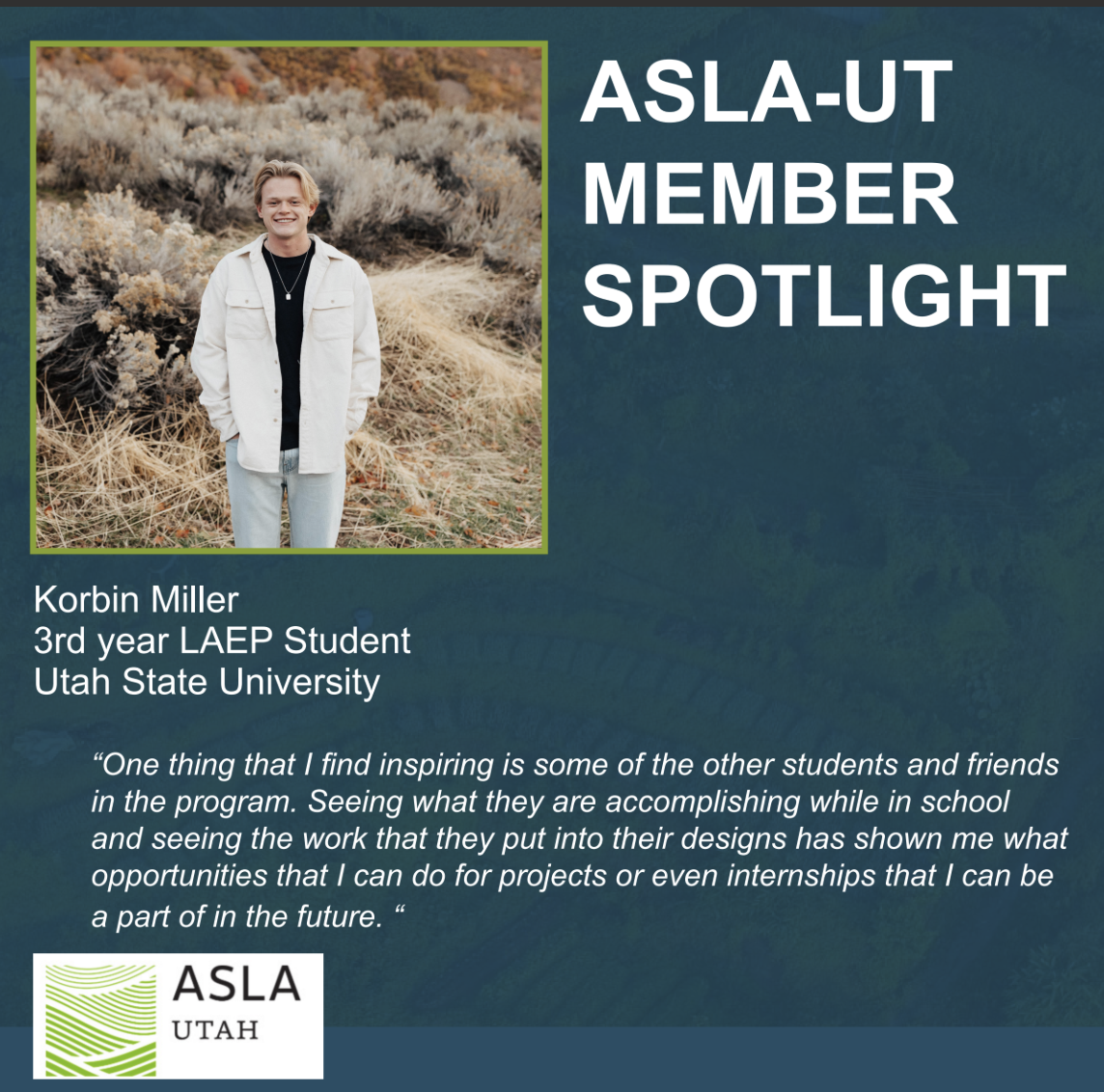
Where did you grow up? I grew up in Herriman, UT.

What led you to landscape architecture? My dad has been in the landscape industry pretty much since he graduated high school, so I grew up in the landscape world. As I was growing up, I always loved art and being creative in that way, so one day in high school dad told me about landscape architecture and told me to try it out. Ever since high school I have been learning everything I can about landscape architecture and the industry as a whole.

What is your favorite part of your practice? I love the creativity and the collaboration of landscape architecture. Working together with other students and even practicing professionals have helped me with my creativity with designs and it has really showed me how diverse the industry can be.

What is your favorite hobby? I have always loved to read books, draw, and hiking or just being outside.

What do you find inspiring? One thing that I find inspiring is some of the other students and friends in the program. Seeing what they are accomplishing while in school and seeing the work that they put into their designs has shown me what opportunities that I can do for projects or even internships that I can be a part of in the future.

Describe a notable landscape architecture project you were involved in. One project I worked on recently for the Planting Design Class was creating a planting design for the city of Hyde Park, UT.

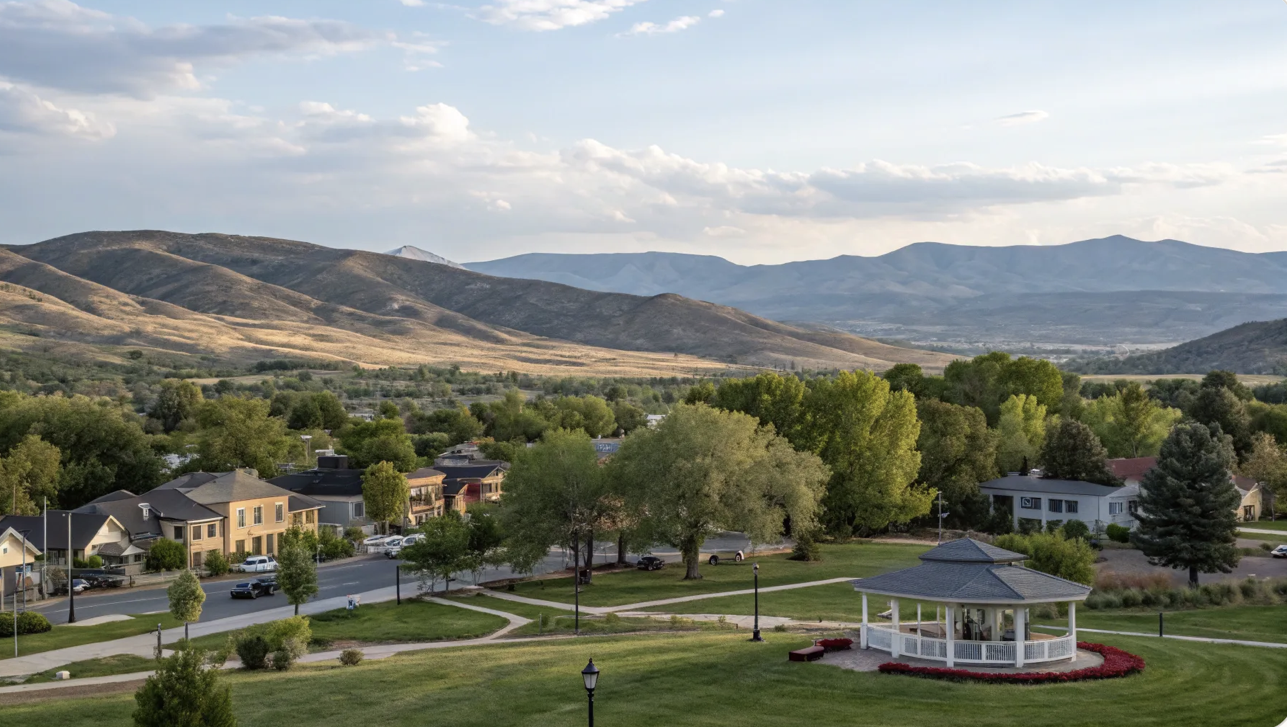
This was a group project where we all came up with an amazing design for this park with the intent of making this park feel like you walked right into the mountains while still being in the city. The park also had some wetland restoration included in the design, so it was a challenging but fun project to collaborate with my classmates and being able to learn more about the logistics of park design made this project a lot more interesting for me to be a part of.


2026 Conference Recap

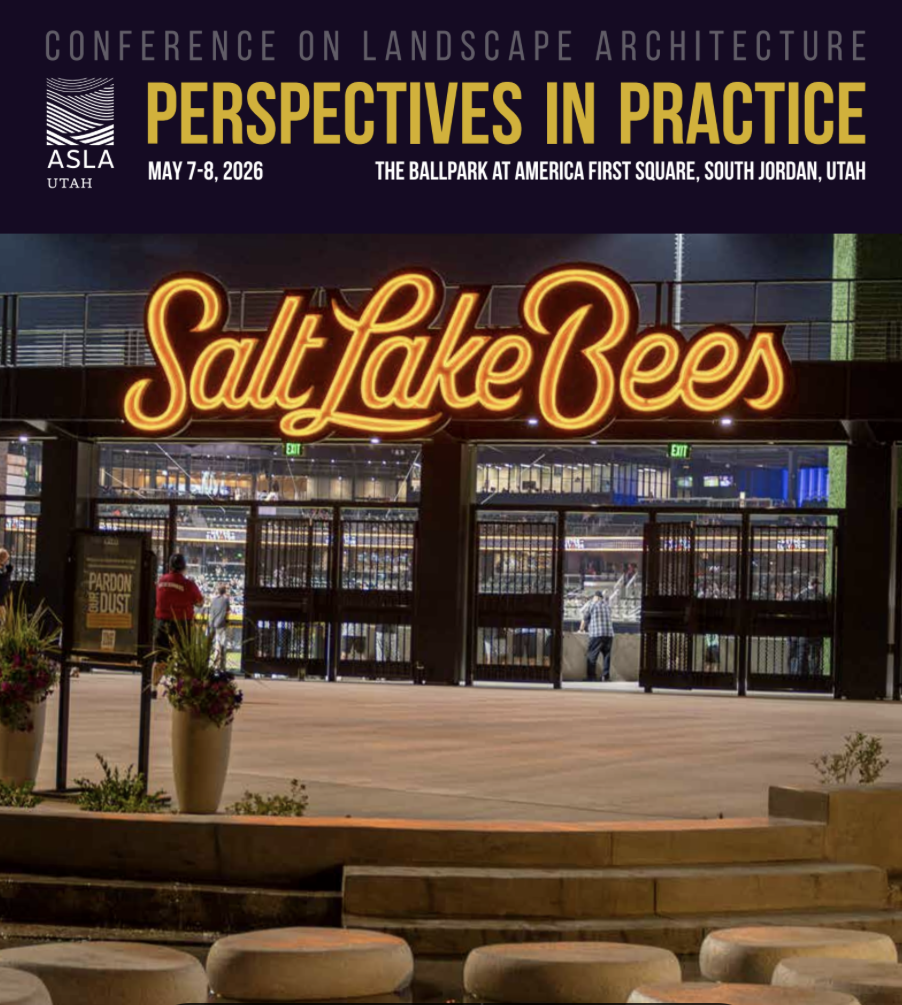
Thank you to everyone who attended, exhibited, presented, sponsored and helped organize the 2026 Annual Conference. The Ballpark at American First Square in Daybreak was a unique venue with a spectacular view and the presentations, panels and site tours were equally amazing.

Michael Todoran from Haps Agency generously to provided complimentary professional photography for the conference.   Click Here to see these beautiful images.


Special Thanks to ASLA Utah 2026 Sponsors & Corporate Partners for their Support!

Platinum Sponsors
BioGrass | Great Western Recreation | Rain Bird

Gold Sponsors
Belgard | Hunter/FX Luminaire | LuckyDog Recreation | MADRAX/Thomas Steele | Victor Stanley

Silver Sponsors

Berliner | Chanshare Farms | Landscape Forms | Maglin | Omega II Fence System | PlaySpace Designs | Progressive Plants | Raft River Sod | ROMEX | Sports West Construction | Utah Topsoil & Hauling Co. | Vortex Aquatic Structures

Bronze Sponsors 
3Form | Amiad | Basalte | CES&R | Daltile | Forms+Surfaces | GPH Irrigation | Garrett Parks & Play | Granite Seed | Hanover Architectural Product | Inman Interwest | Live Earth Products | Miller Companies | Mountainland Supply | Musco | Netafim | PIkus3D | Premier Equestrian | QCP | RepMasters | Soake Pools | Sonntag Recreation | Stepstone Inc. | TORO | Tournesol | Utah Line Works

Corporate Partners

Learn More About Our Sponsors

APRIL 2026 NEWSLETTER


ASLA UTAH APRIL 2026 NEWSLETTER

LEADERSHIP EXPRESS

Jesse Allen, ASLA Utah President


UPCOMING EVENTS

THURSDAY, May 7th 6:30-8:30 PM — Evening Social/Tour

FRIDAY, May 8th - Conference and Vendor Expo

Keynote Speaker:

Kona Gray

FASLA, PLA, Immediate Past President


Dear Landscape Architect: A monthly feature from ASLA Utah exploring the art, ethics, and evolving practice of landscape architecture — written to spark conversation, reflection, and renewed care in our craft.

Submit your question to dearlautah@gmail.com

Dear Landscape Architect: “How do you help or deal with coworkers that don’t seem to care about landscape architecture and just seem to do this for a paycheck (no passion)? I love our profession and try to do the best I can on projects. Am I the problem?”

I appreciate you asking this question because it points to a core competency in our field: collaboration. Landscape architecture is a team sport—clients, engineers, architects, contractors, agencies, and the public all shape the outcome. Passion helps, but collaboration skills are what turn a mix of motivations into a coherent project and keep your own passion from tipping into frustration or burnout.

The trick is to collaborate with—not try to convert—people who don’t share your level of passion for landscape architecture. On any team, values and incentives vary; your job is to create clarity, alignment, and momentum. One of my favorite interview questions is, “Why did you choose landscape architecture?” The answer often reveals how someone prefers to work, what they prioritize, and what kind of collaboration helps them do their best work.

Here are a few collaboration-forward strategies for working with teammates whose motivations may differ from your own:

Collaborate around outcomes (not shared motivation)

  • Replace emotional appeals with collaboration basics: define the goal, assign owners, agree on deadlines, and document decisions. Clarity is the most reliable “motivation.”

  • Build a small collaboration network. You don’t need everyone to think like you; you need a few reliable partners—an ally on your team, a mentor, or an external peer group (e.g., the Utah ASLA chapter)—to pressure-test ideas and keep communication healthy.

  • Use your passion strategically: invest deeply where you have influence, and collaborate pragmatically where you don’t. Boundaries aren’t a lack of care—they’re what make you dependable over time.

Check your collaboration signals (you may be unintentionally raising the friction)

  • Is your communication clear, respectful, and specific—or is it mostly frustration?

  • Are you setting agreements (scope, quality bar, timeline) and then trusting people—or micromanaging the how?

  • Are you treating your passion as the only “right” approach, or inviting others into shared standards and decision criteria?

  • Are you working with people whose strengths complement yours—and are you giving them a way to contribute meaningfully?

  • Is firm culture, leadership, or market sector shaping how collaboration works day-to- day? Which parts can you improve through process (roles, meetings, handoffs, feedback loops), and which parts require a different environment?

In the end:

  • Your passion is a strength—use it to elevate the work, not to measure other people’s worth.

  • Focus on what you can influence: set clear expectations, invite input, make decisions transparent, and follow through. That’s what strong collaboration looks like.

  • Passion is like a fire: useful when directed into craft and service, risky when it turns into resentment. Sustainable collaboration protects both the project and the people doing it.

  • The goal isn’t to care less—it’s to care more wisely, more sustainably, and in ways that make it easier for others to work well with you.

As a landscape architect, you’re not “the problem.” And yes—trees are always the answer.

Have you navigated similar dynamics at work—or found collaboration habits that protect your passion while strengthening the team? Email your thoughts at dearlautah@gmail.com


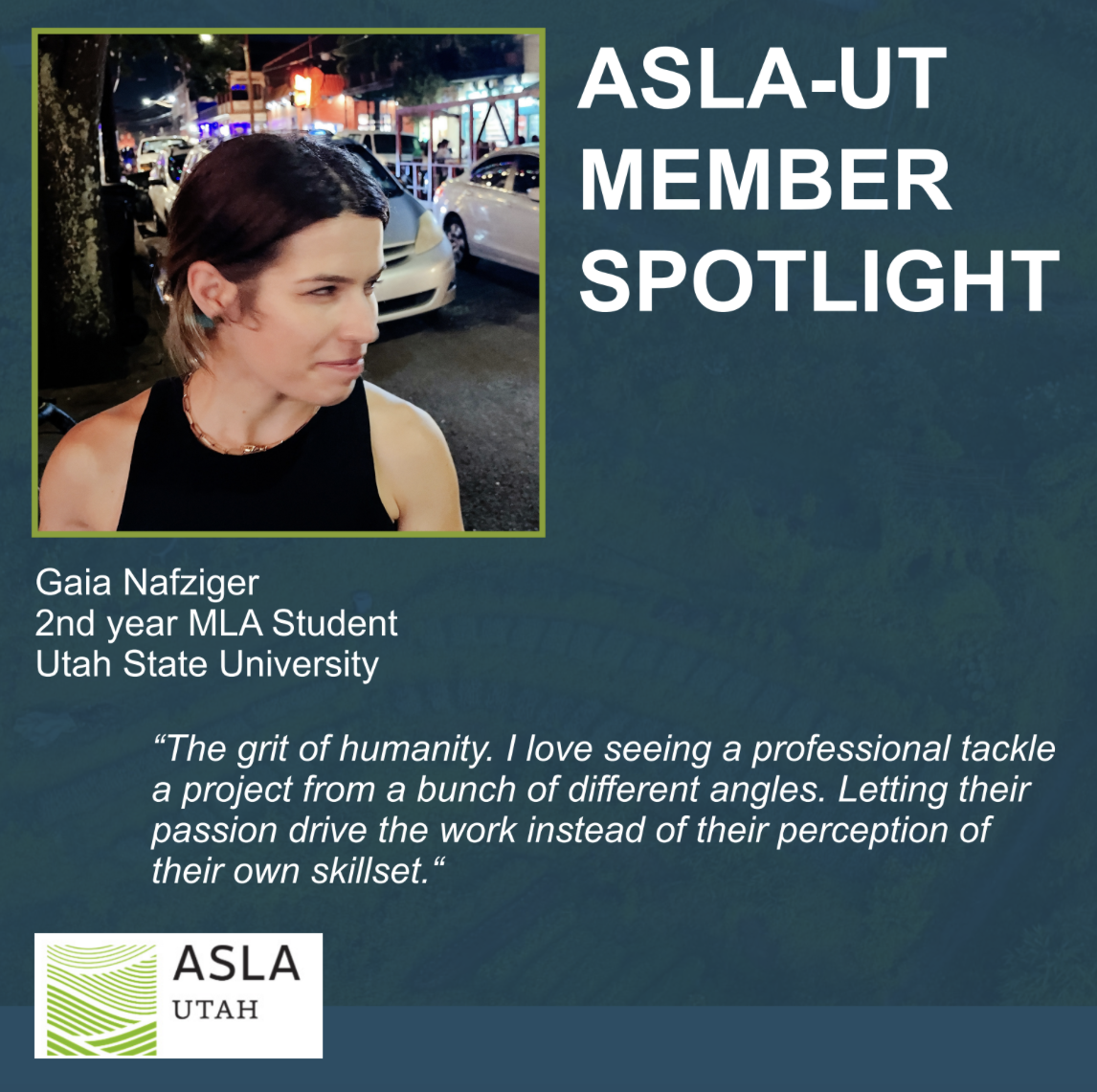
Where did you grow up? On The Island in Logan City (IYKYK)

What led you to landscape architecture? I have an older sister who is a USU LAEP alumnus. She spoke of it often, but I never understood exactly what Landscape Architecture was. I ended up looking into programs on a lark and fell in love with the expansive and collaborative nature of the discipline. With a background in hard sciences, the idea of being able to do something with your research is very enticing.

What is your favorite part of your practice? Finding the narrative threads of a project. Being able to synthesize the complex nature of a problem into something digestible and actionable.

What is your favorite hobby? I’m terrible with favorites! Lately, I’ve been teaching myself to play the ukulele, which has been a small joy and respite from my MLA coursework.

What do you find inspiring? The grit of humanity. I love seeing a professional tackle a project from a bunch of different angles. Letting their passion drive the work instead of their perception of their own skillset.

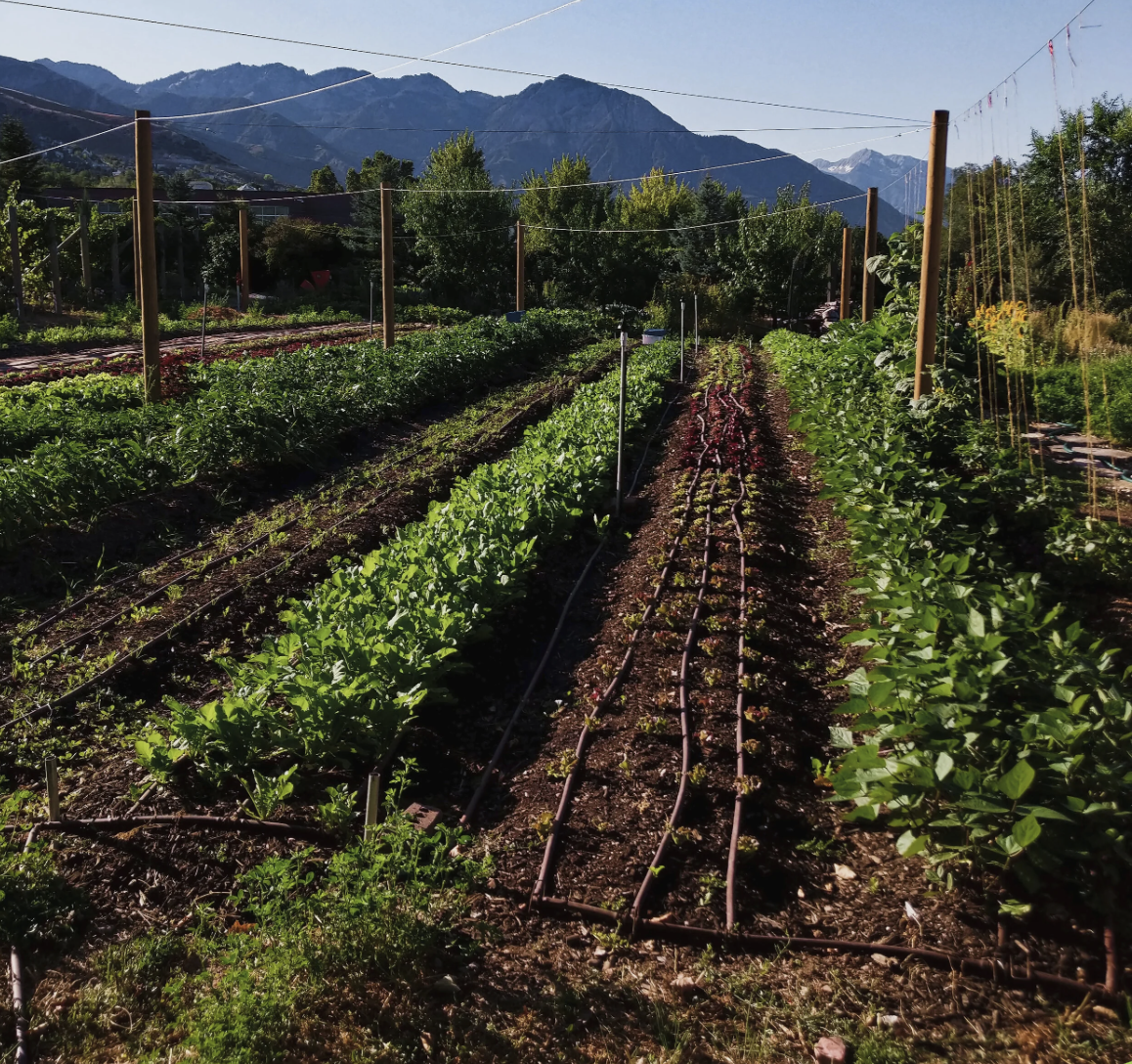
Describe a notable landscape architecture project you were involved in. It is ongoing, but I’ve been working on a project with Joe and Paula Swaner Sargetakis called Frog Bench Farmstead. It’s agritourism, but they keep it really grounded in Education in this way that centers the local community and invests in it. Watching and participating as the design unfolds has been incredible.


Special Thanks to ASLA Utah 2026 Sponsors & Corporate Partners for their Support!

Platinum Sponsors
BioGrass | Great Western Recreation | Rain Bird

Gold Sponsors
Belgard | Hunter/FX Luminaire | LuckyDog Recreation | MADRAX/Thomas Steele | Victor Stanley

Silver Sponsors

Berliner | Chanshare Farms | Landscape Forms | Maglin | Omega II Fence System | PlaySpace Designs | Progressive Plants | Raft River Sod | ROMEX | Sports West Construction | Utah Topsoil & Hauling Co. | Vortex Aquatic Structures

Bronze Sponsors 
3Form | Amiad | Basalte | CES&R | Daltile | Forms+Surfaces | GPH Irrigation | Garrett Parks & Play | Granite Seed | Hanover Architectural Product | Inman Interwest | Live Earth Products | Miller Companies | Mountainland Supply | Musco | Netafim | PIkus3D | Premier Equestrian | QCP | RepMasters | Soake Pools | Sonntag Recreation | Stepstone Inc. | TORO | Tournesol | Utah Line Works

Corporate Partners

Learn More About Our Sponsors

February 2026 NEWSLETTER


ASLA UTAH FEBRUARY 2026 NEWSLETTER

LEADERSHIP EXPRESS

Jesse Allen, ASLA Utah President

.I’m writing this month’s message while finally looking out the window at snow on the ground. After one of the driest December and January periods in Utah’s recorded history, it’s hard not to feel some relief. It’s also a reminder of how closely we watch water in this state, and how quickly concern turns into urgency when it’s missing.

Ongoing news about the Great Salt Lake has made water conservation a more public issue and impossible to ignore. Lake levels, exposed lakebed, air quality, and long-term ecological impacts are affecting communities across Utah. These are not abstract ideas. 

Landscape architects have an important role to play.

Landscape architecture is recognized nationally as a STEM discipline, following a multi-year advocacy effort led by ASLA National. In 2020, Landscape Architecture was added to the federal STEM Designated Degree Program List, reflecting our foundation in science, technology, engineering, and mathematics as applied to environmental systems.

 That scientific and technical grounding positions landscape architects to contribute real value to conversations about water conservation, watershed health, and the long-term future of the Great Salt Lake.

There are practical ways for us to engage:

  • Serve on boards, commissions, and advisory groups where policies and standards are shaped.

  • Pay attention to water-related bills being discussed during the current legislative session and consider writing letters to local and state leaders to share your professional perspective.

  • Encourage large institutional, municipal, and regional clients to revisit landscape standards and move toward performance-based, resilient requirements.

  • Participate in public surveys and comment periods.

  • Incorporate water conservation intentionally into projects, from planting design to irrigation strategy and long-term maintenance planning.

Landscape architects are not observers in this conversation. We can bring our technical knowledge and systems thinking to the table, we help shape decisions that directly influence water demand and environmental health across Utah.

Seeing snow on the ground is encouraging. Making smart, science-based decisions about water use is even more important. As we move forward, I encourage all of us to apply our expertise deliberately and confidently to help shape more resilient outdoor environments and communities.


UPCOMING EVENTS


2026 ASLA Utah Annual Conference

The Salt Lake Bees Ballpark at America First Square

Keynote Speaker:

Kona Gray

FASLA, PLA, Immediate Past President

THURSDAY, May 7th 6:30-8:30 PM — Evening Social/Tour

FRIDAY, May 8th - Conference and Vendor Expo

2026 Conference Pricing:

  • EARLY BIRD PRICING FOR ASLA Members & Allied Professionals: $200 (ends March 1st)

  • ASLA Member $250

  • Allied Professional eg: AIA/UNLA/ACEC Member $250

  • Non-Member: $275

    • Want to save $50? JOIN ASLA NOW! The savings for this event covers Utah Chapter dues! Plus gains access to all ASLA Benefits!

    • Have questions about membership? Reach out to anyone on the Executive Committee!

  • Emerging Professional: $100

  • Student $45

  • Non-LAEP Student: $100

  • ASLA UT SubCommittee Member: $100

  • Conference Speaker: $150


“I’m inspired by ecological systems at small scales, particularly microbiology and food systems. Music is also a major source of inspiration; its rhythmic flows and sequences can be mirrored in the Landscape.“


Dear Landscape Architect: A monthly feature from ASLA Utah exploring the art, ethics, and evolving practice of landscape architecture — written to spark conversation, reflection, and renewed care in our craft.

Submit your question to dearlautah@gmail.com

Dear Landscape Architect: How does landscape architecture make places safer?

Thank you for this great question! — The deeper you examine the profession, the clearer it becomes that safety is not a side consideration — it is foundational to what we do.

This is one of those questions where the more you sit with it, the more you realize just how much of our work is actually about safety — even when it doesn’t look like it on the surface.

Accessibility and Universal Design

At the most visible level, landscape architects advocate for and implement safety standards that protect users every day. The passage of the Americans with Disabilities Act significantly reshaped the built environment, and our profession has played a major role in advancing universal accessibility.

Designing for varying mobility levels does more than meet code requirements — it creates inclusive environments where children, parents, grandparents, and individuals of all abilities can participate in public life safely and with dignity. When universal design principles are thoughtfully integrated, accessibility becomes seamless, and safety becomes equitable.

Designing Spaces People Want to Use

Safety is not only about rails, slopes, and fall zones. Often, it begins with creating places people genuinely want to spend time in.

When spaces are welcoming, comfortable, and well-loved, they attract consistent use. And when people are present, there are “eyes on the street.” Passive observation discourages everyday crime and increases perceived safety. Clear sightlines, appropriate lighting, intuitive circulation, and well-defined gathering areas all contribute to environments that feel secure without feelingfortified.

Good design itself becomes a preventative safety strategy.

Safer Streets Through Design

Landscape architects shape safer streets — often without labelling it ‘traffic engineering’.

Narrower travel lanes, pedestrian refuges, parkway plantings, street trees, textured paving, and engaging edges naturally calm traffic. When drivers experience spatial enclosure, visual interest, and visible pedestrian activity, speeds drop.

Safe Routes to School initiatives are a clear example of how relatively small design moves can dramatically improve both actual and perceived safety for children walking and biking each day.

Planting design also plays a protective role. Landscaped buffers separate pedestrians from vehicular traffic. Thoughtful planting can define distinct activity areas within parks, reducing user conflicts while enhancing beauty.

Environmental Protection as Public Safety

Environmental resilience is another essential layer of safety.

Stormwater management strategies, green infrastructure, permeable surfaces, slope stabilization, and streambank restoration reduce flooding, prevent erosion, and protect infrastructure and homes. These systems help communities remain functional and safe during increasingly intense climate events.

Waterwise planting strategies and irrigation systems that utilize secondary or recycled water also protect potable water supplies — directly contributing to long-term public health and safety.

Resilient landscapes are not aesthetic add-ons; they are protective infrastructure.

Human Health and Well-Being

Safety is not only physical — it is social and psychological.

Seniors are safer when mobility needs are anticipated. Children are safer and healthier when neighborhoods encourage outdoor play. Public spaces designed to be inclusive rather than hostile foster dignity and reduce vulnerability for unhoused individuals.

Shade trees mitigate heat stress and reduce sun exposure. Access to greenery lowers stress, supports mental health, and encourages physical activity. Environments that feel restorative and welcoming directly influence public well-being.

Ecological Safety and Biodiversity

Non-human safety is also part of the equation.

Promoting native plant communities, eliminating invasive species, restoring habitats, and incorporating wildlife corridors reduce conflicts between animals and infrastructure while strengthening ecosystems. Pollinator gardens and biodiverse landscapes sustain the natural processes that ultimately sustain human life.

Ecological health and human safety are deeply connected.

A Layered Approach to Safety

The common thread through all of this is integration. Landscape architects do not solve one safety issue at a time. We layer social, environmental, physical, and ecological safety into the same spaces.

Through thoughtful planning, careful documentation, and responsible construction guidance, we help ensure landscapes are built to protect health, safety, and welfare.

That layered, systems-based approach is the quiet power of the profession — and something landscape architects should confidently and proudly claim.


Special Thanks to ASLA Utah 2026 Sponsors & Corporate Partners for their Support!

Platinum Sponsors
BioGrass | Great Western Recreation | Rain Bird

Gold Sponsors
Belgard | Hunter/FX Luminaire | LuckyDog Recreation | MADRAX/Thomas Steele | Victor Stanley

Silver Sponsors

Berliner | Chanshare Farms | Landscape Forms | Maglin | Omega II Fence System | PlaySpace Designs | Progressive Plants | Raft River Sod | ROMEX | Sports West Construction | Utah Topsoil & Hauling Co. | Vortex Aquatic Structures

Bronze Sponsors 
3Form | Adobe Rock | Amiad | Basalte | CES&R | Daltile | Forms+Surfaces | Crysto | GPH Irrigation | Garrett Parks & Play | Granite Seed | Hanover Architectural Product | Inman Interwest | Live Earth Products | Miller Companies | Mountainland Supply | Mountain West Precast | Musco | Netafim | Picasso Gate | QCP | RepMasters | Soake Pools | Sonntag Recreation | Stepstone Inc. | TORO | Tournesol | Utah Line Works

Corporate Partners

Learn More About Our Sponsors

MARCH 2026 NEWSLETTER


ASLA UTAH MARCH 2026 NEWSLETTER

LEADERSHIP EXPRESS

Jesse Allen, ASLA Utah President

As another legislative session comes to a close in Utah, professional licensure has once again been part of the broader conversation. It’s a reminder that licensure is something that gets revisited and evaluated regularly. It’s also something we don’t always talk about enough.

ASLA National continues to advocate for licensure as a foundation of the profession. All 50 states and the District of Columbia require landscape architects to be licensed to protect public health, safety, and welfare. At its core, licensure sets a consistent standard for how we practice and how we’re held accountable for the work we do.

https://www.asla.org/about/advocacy/licensure

In past newsletters, I’ve talked about how it can be more effective to explain landscape architecture by focusing on how it impacts people. It may help to talk about licensure in the same way.

 1. Public Health, Safety, and Welfare

Instead of: Licensure ensures that landscape architects meet standards that protect public health, safety, and welfare.

Try: Licensure helps make sure the outdoor spaces people use every day are safe, comfortable, and designed to support how people move, gather, and spend time outside.

 2. Environmental Stewardship

Instead of: Licensed landscape architects are trained in site design, grading, drainage, and environmental systems.

Try: Licensed landscape architects understand how water moves through the land, helping reduce flooding, prevent erosion, and conserve water in ways that protect communities and natural systems like the Great Salt Lake.

 3. Professional Competence

Instead of: Licensure establishes accountability and reduces risk associated with improper design.

Try: Licensure helps ensure that the people designing outdoor spaces are responsible for getting it right, so communities avoid costly mistakes and end up with places that work well over time.

Each year, lawmakers look at occupational licensing, scope of practice, and how professions are regulated. Those conversations can shape how our profession is understood and how we’re allowed to contribute.

 For the public, licensure builds trust. It tells people that landscape architects are trained, tested, and accountable. For our peers in architecture, engineering, and planning, it reinforces that we bring real technical depth and responsibility to the table.

 For those who are already licensed, I’d encourage you to continue to communicate the value of that credential. For those working toward it, I’d encourage you to keep going. It’s an investment not just in your own career, but in the strength and credibility of the profession as a whole.

 At the end of the day, licensure isn’t just a requirement. It’s part of how we build trust, strengthen recognition, and ensure that landscape architects continue to play a meaningful role in shaping the environments and communities around us.


UPCOMING EVENTS


2026 ASLA Utah Annual Conference

“PERSPECTIVES IN PRACTICE”

The Salt Lake Bees Ballpark at America First Square 11111 Ballpark Dr, South Jordan, UT 84009

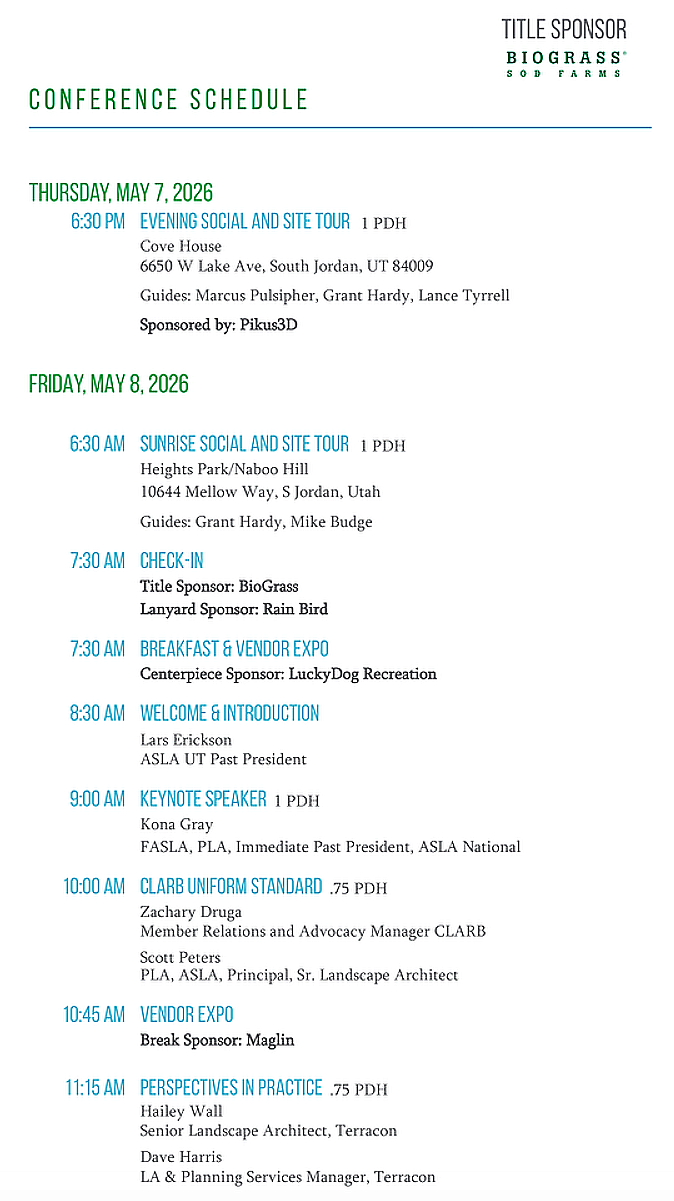
2026 Conference Schedule

THURSDAY, May 7th, 6:30pm - EVENING SOCIAL AND SITE TOUR 1 PDH Cove House, 6650 W Lake Ave, South Jordan Sponsored by Pikus3D.

FRIDAY, May 8th, 6:00am - SUNRISE SOCIAL AND 1K  1 PDH Heights Park/Naboo Hill, 10644 Mellow Way, S Jordan

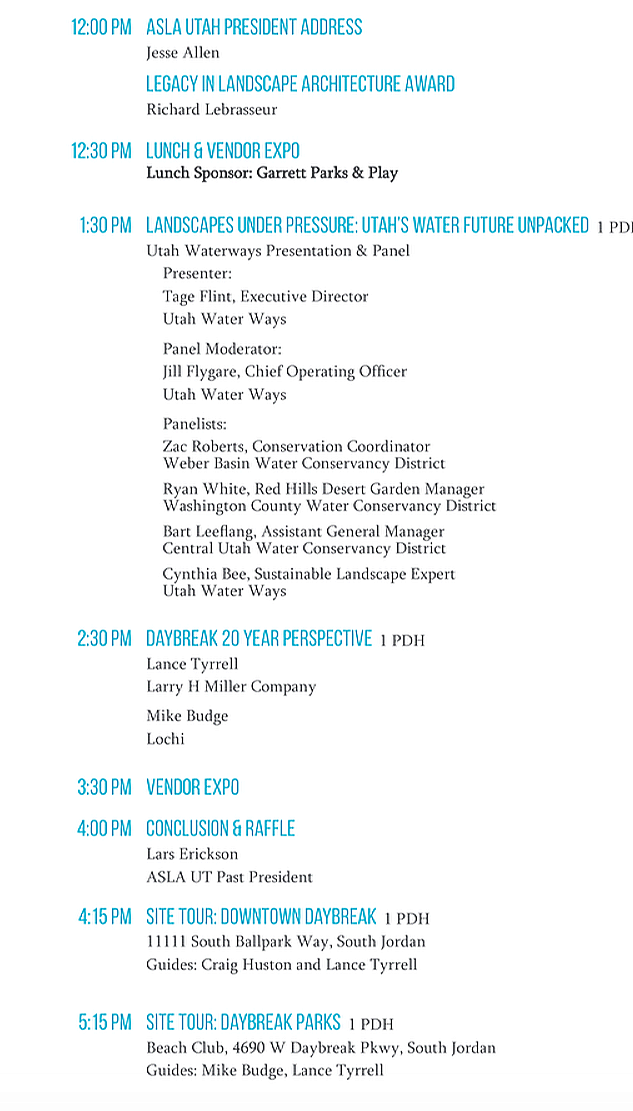
FRIDAY, May 8th, 7:30am - CONFERENCE ON LANDSCAPE ARCHITECTURE. Title Sponsor: BioGrass 7:30am - Breakfast & Vendor Expo Lanyard Sponsor: Rain Bird & Centerpiece Sponsor: LuckyDog Rec

8:30am - Welcome & Introduction. Lars Erickson, ASLA UT Past President

9:00am - Keynote Speaker 1 PDH Kona Gray, FASLA, PLA, Immediate Past President, ASLA National 

10:00am - CLARB Uniform Standard .75 PDH  Zachary Druga, CLARB Member Relations & Advocacy Mgr., Scott Peters, PLA, ASLA, Principal, Sr. Landscape Architect

10:45am - Vendor Expo  Break Sponsor: Maglin

11:15am - Perspectives in Practice .75 PDH. Hailey Wall, Terracon and Dave Harris, Terracon

12:00pm - ASLA Utah President Address: Jesse Allen Legacy in Landscape Architecture Award Presentation- Sumner Swaner

12:30pm LUNCH & Vendor Expo. Lunch Sponsor: Garrett Parks & Play

1:30pmLandscapes Under Pressure: Utah’s Water Future Unpacked 1 PDH Utah Waterways Presentation & Panel: Tage Flint, Jill Flygare, Cynthia Bee

2:30pm - Daybreak 20 Year Perspective 1 PDH Larry H Miller Company & Lance Tyrrell 

3:30pm - Vendor Expo

4:00pm - Conclusion & Raffle: Lars Erickson, ASLA UT Past President

4:15pm - SITE TOUR: Downtown Daybreak 1 PDH  11111 South Ballpark Way, South Jordan

5:15pm - SITE TOUR: Daybreak Parks 1 PDH  Starting Point: Beach Club, 4690 W Daybreak Pkwy, S. Jordan


“Dear Landscape Architect:”

A monthly feature from ASLA Utah exploring the art, ethics, and evolving practice of landscape architecture — written to spark conversation, reflection, and renewed care in our craft.

Submit your question to dearlautah@gmail.com

Dear Landscape Architect:

“What are your favorite design/installations in Utah—especially with regard to educating people about what a Landscape Architect does?”

Thank you for this thoughtful question. Two places stand out for how they help the public understand landscape architecture—one through direct instruction, the other through lived experience: the Jordan Valley Conservation Garden Park and the Daybreak Community. Together, they show how both explicit educational tools and everyday interaction with designed environments can deepen public understanding of the environmental, functional, and social value of our field.

The Jordan Valley Conservation Garden Park offers a clear and intentional learning experience. Interpretive signage, workshops, and demonstration areas teach visitors about water conservation, soil health, drainage, plant grouping, and the use of native and adaptive species. Through these design and programming choices, the park illustrates that landscape architecture is not just aesthetic—it's about environmental planning, resource stewardship, and long-term function.

Daybreak: Design Embedded in Community In contrast, the Daybreak Community educates through daily experience. As a master-planned environment, it weaves landscape architecture principles into streetscapes, parks, trails, and water systems, showing residents—often without them realizing it—that outdoor environments are intentionally designed systems influencing how a community functions.

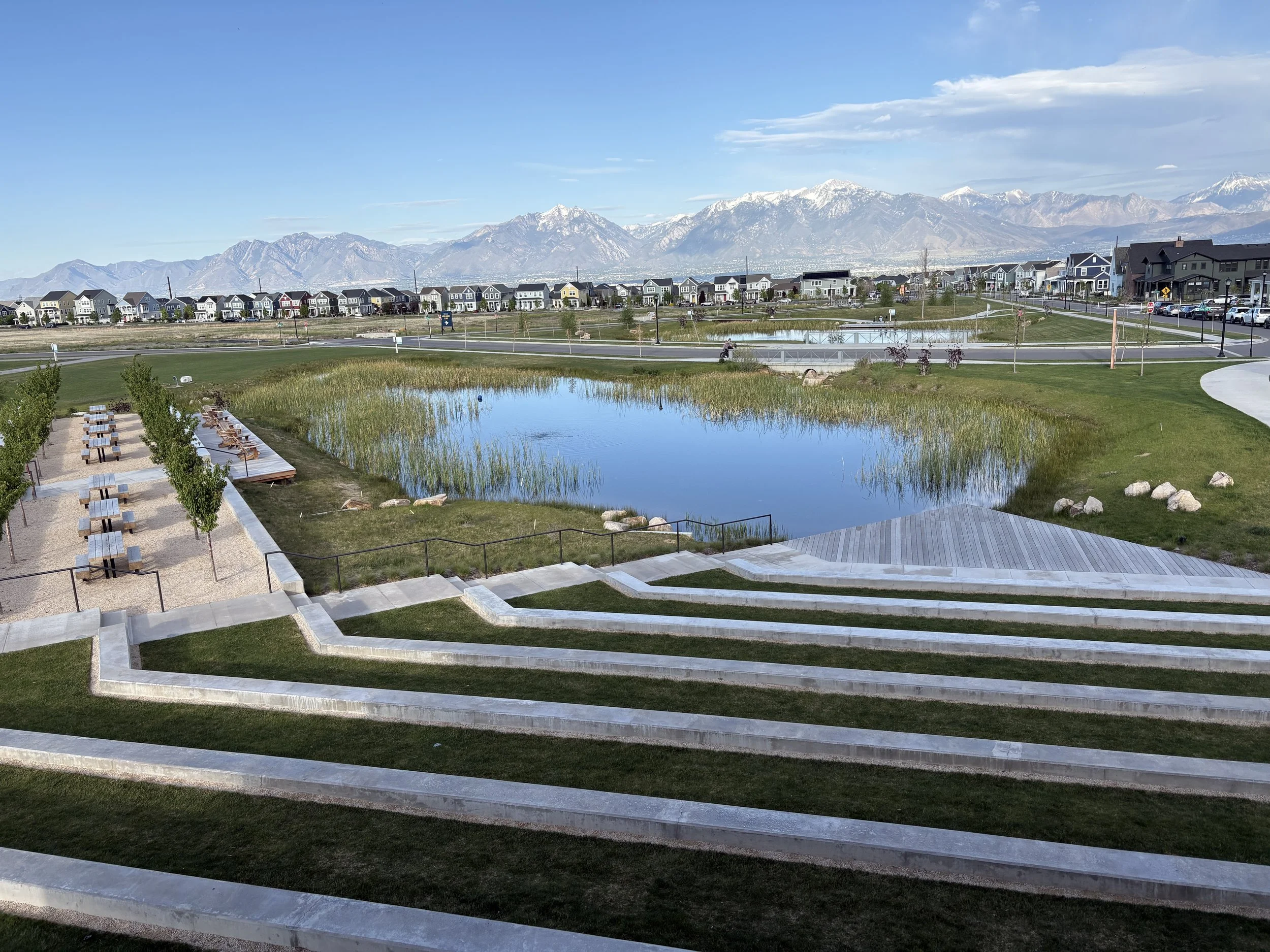
Stormwater as a Visible Teaching Tool: Daybreak’s stormwater system, including Oquirrh Lake, basins, and wetlands, makes environmental processes easy to see. These features show how water is captured, filtered, and returned to aquifers, offering residents direct insight into the role landscape architects play in water management—particularly vital in a dry region like Utah.

Shaping Daily Life: Walkable streets, shaded pathways, and interconnected open spaces guide movement, social interaction, and well-being. These elements demonstrate how thoughtful design supports health, nature connection, transportation, and community life.

Planning at Multiple Scales: The community also reveals the importance of planning across scales. Open space networks, green corridors, and water systems are integrated with infrastructure from the start, reinforcing the broad scope of landscape architectural thinking.

Opportunities for Clearer Public Education: While Daybreak excels in experiential learning, it lacks clear on-site interpretation. Strategic signage could help residents connect their positive experiences to the intentional work of landscape architects—for example, explaining how water-efficient landscapes lower costs, how native planting reduces maintenance, or how stormwater systems support aquifer recharge and habitat.

Teaching by Design—and by Experience: Together, Daybreak and the Jordan Valley Conservation Garden Park show the power of combining hands-on interpretation with community-scale experiential learning. Both approaches help broaden public awareness of what landscape architecture is and why it matters.

We’d love to hear what places you think teach the public about landscape architecture—and how they do it. Email your thoughts to dearlautah@gmail.com, and I may feature them in a future column.


Celebrate America’s 250th Anniversary by Completing a Historic American Landscape Survey (HALS)!

Amy Reid, HALS

Calling all history enthusiasts!

Now is your chance to contribute to the documentation of Utah’s historic landscapes. This year’s HALS theme encourages reports on “landscapes of liberty and freedom.” Across our nation landscapes of all types hold memories of the pursuit of freedom in its many forms.

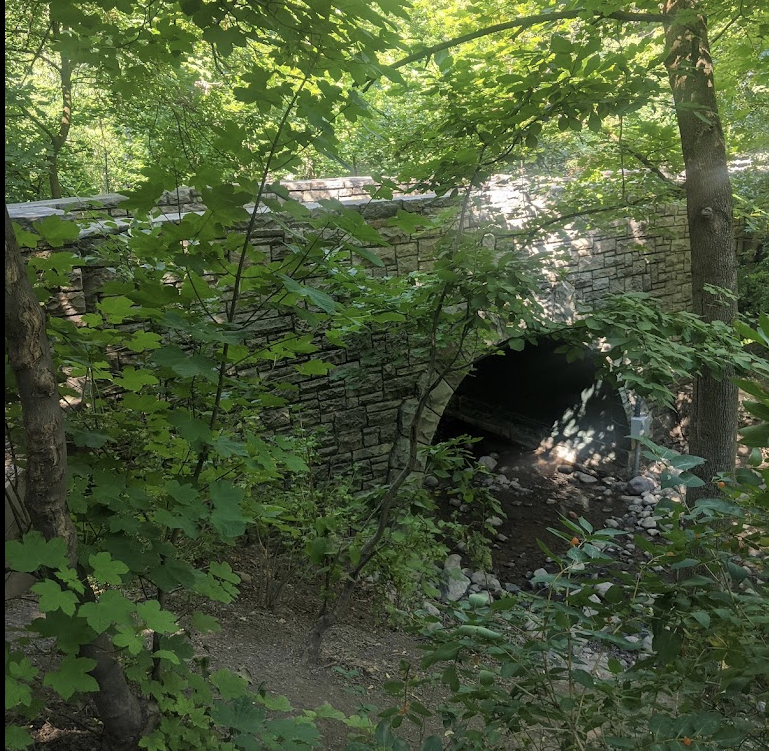
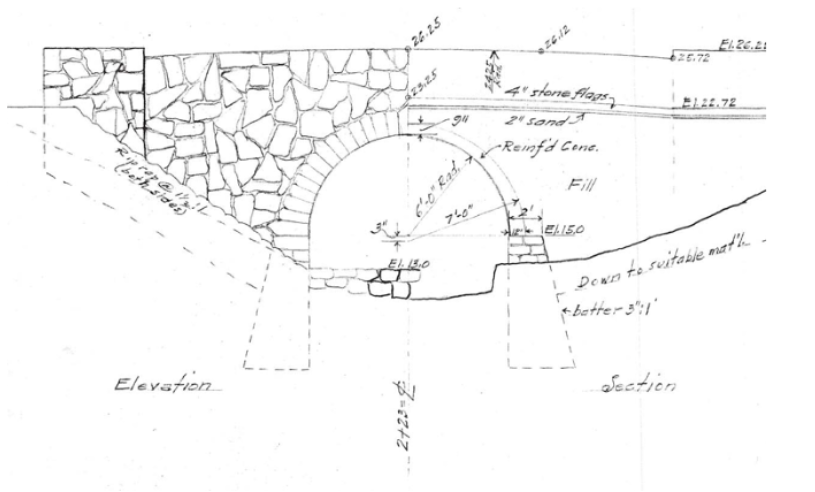
Almost daily I walk through Miller Bird Refuge in Salt Lake City, a landscape along Red Butte Creek with rustic rubble* retaining walls and beautifully crafted features including a flagstone footbridge built during the Great Depression by the Works Progress Administration (WPA). Stories of craftsmanship, struggle, hard work, and economic freedom are built into the landscape.

For me, Miller Bird Refuge is a physical reminder of how our nation freed tens of thousands of Utahns from the bonds of poverty during the darkest of times by employing skilled craftsmen and unskilled laborers to enhance parks and public spaces.

Footbridge for Lee Charles Miller Park (known today as Miller Bird Refuge), 1936. *Rubble masonry from the WPA era (1935–1943) refers to a construction technique used in New Deal public works projects, characterized by the use of irregular local stones laid together with mortar. This style is a key component of WPA Rustic architecture, designed to harmonize with the natural landscape and provide jobs to unskilled and semi-skilled laborers.

What landscape inspires you? Please consider writing a HALS to recognize it. All entries received by August 31, 2026 will be acknowledged at the ASLA conference in September. You may also submit your report to the Library of Congress archives.

Please note, this year the National Park Service is not holding a formal competition. More details can be found at: https://www.asla.org/news-insights/the-field/hals-2026-call-to-action. Contact our Utah HALS Liaison, Amy Reid, at amyreid99@gmail.com with any questions or to register your landscape so we can keep track of those being submitted.


Climate Action and Biodiversity Committee Update

Devon Dillinger, PLA, ASLA, SITES AP, Climate Action & Biodiversity Chair

Moving Climate and Biodiversity Forward in Practice

The release of the ASLA Climate and Biodiversity Action Plan (2026–2030) feels like an important step forward for the profession. It builds on the momentum already underway and focuses on something practical: how we take what we know and apply it more consistently across projects. That shift matters, especially in the Intermountain West.

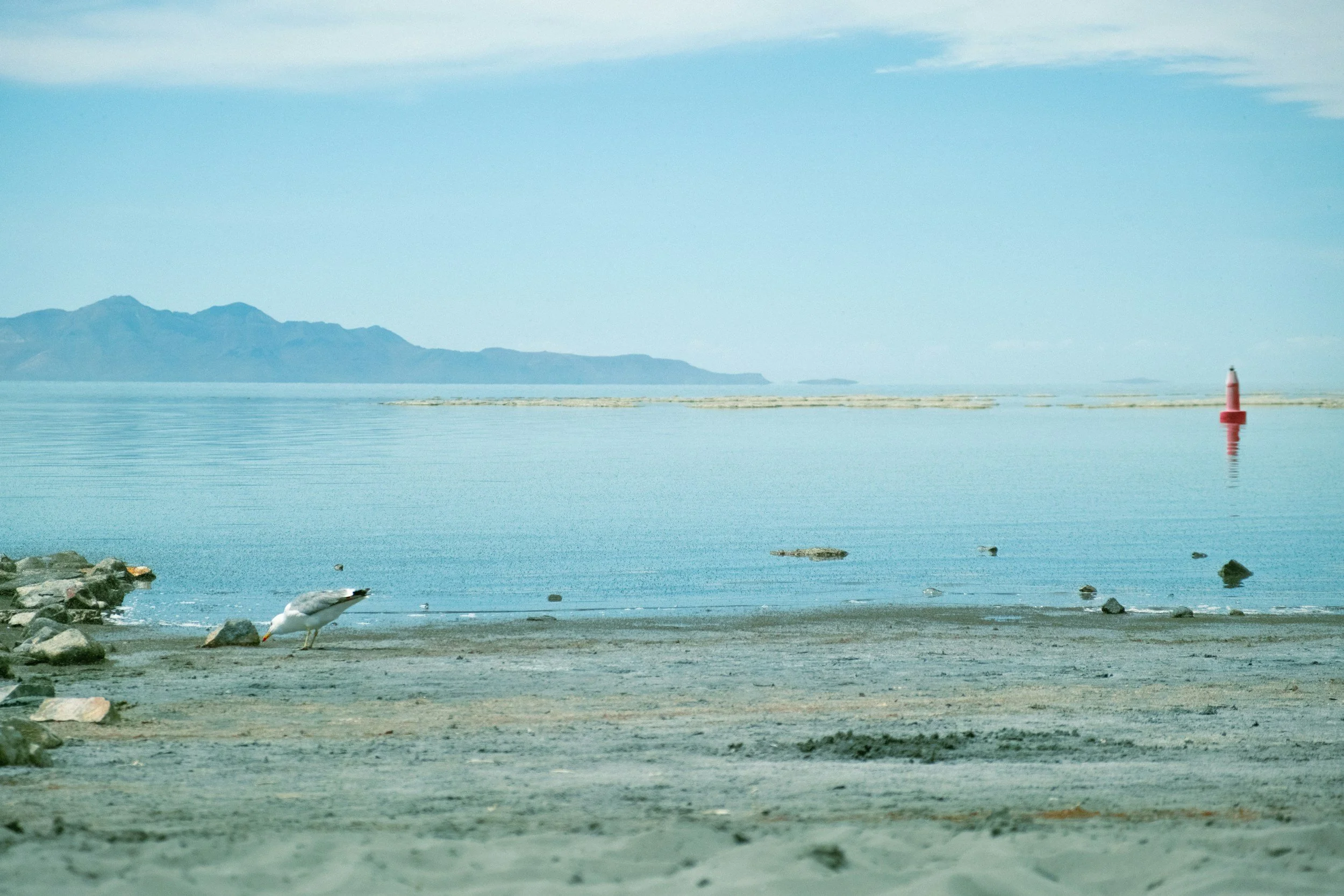
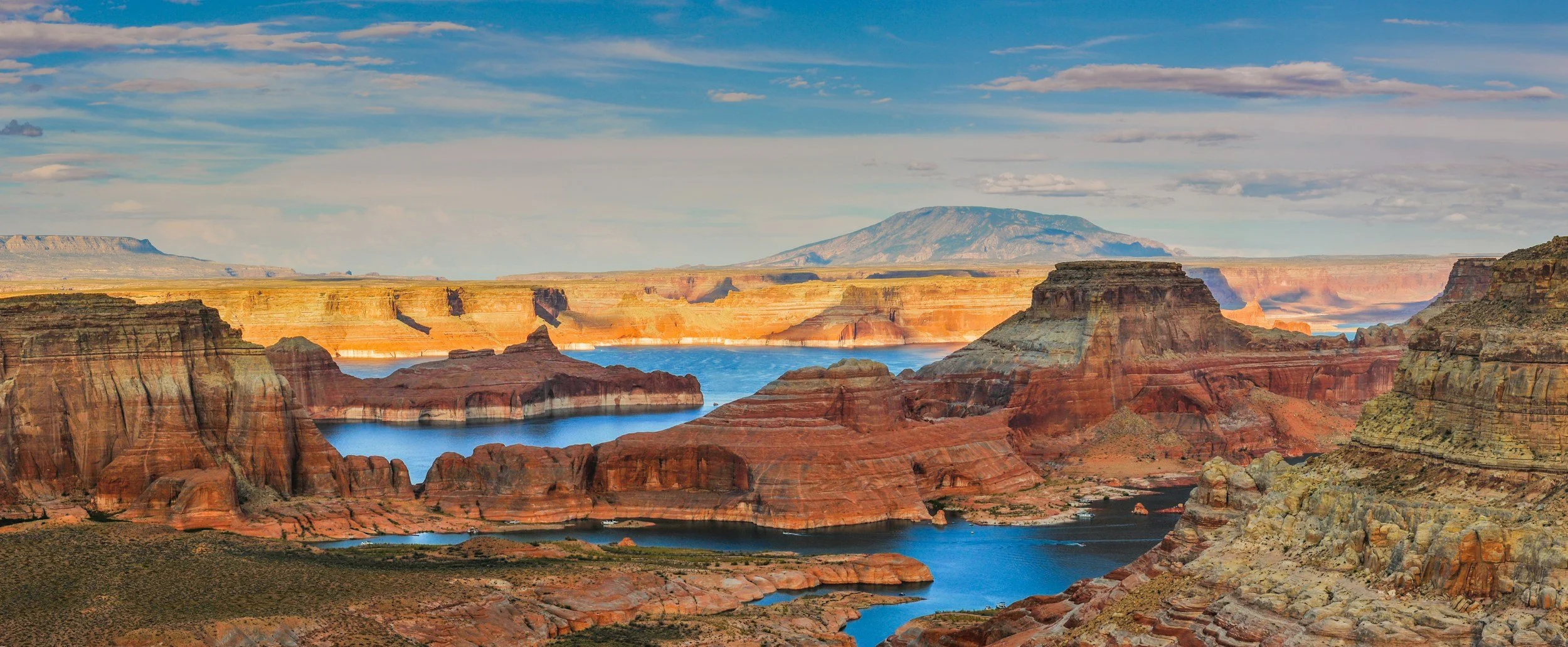
In Utah and the surrounding region, water systems are under visible stress. The Great Salt Lake has become a national example of how declining water levels impact habitat, air quality, and regional health. Lake Powell has fluctuated dramatically over the past decade, exposing shoreline and changing how water is stored and managed across the Colorado River Basin. These are not isolated conditions but signals that are reshaping how we think about land, water, plants, and growth.

For landscape architects, this context changes how we approach site design. Water is no longer just a utility to be managed but a driver of how projects perform over time. The ASLA plan reinforces that climate and biodiversity are interconnected, and in this region, water sits at the center of that relationship. That connection shows up directly in project decisions, particularly in how we design planting, soils, and site systems.

Planting is one of the clearest examples of this shift. Native and climate adapted planting does more than reduce irrigation. It supports habitat, responds to changing conditions, and improves long term performance. Soil strategies function in the same way. When soils are treated as a system rather than a byproduct of grading, they improve infiltration, support plant health, and help stabilize landscapes in a water constrained environment. Early decisions around grading and disturbance also take on greater importance, as preserving existing systems often leads to better outcomes than replacing them.

The ASLA plan also highlights the growing importance of materials and embodied carbon. A significant portion of emissions comes from what we specify and build, which is changing how teams evaluate products. There is a greater emphasis on sourcing, lifecycle impact, and long term durability, and those conversations are happening earlier in the design process. These shifts do not require a complete reinvention of practice but instead a more consistent and informed approach to decisions that are already being made.

What makes this moment different is the level of alignment across the profession. These conversations are no longer isolated to individual projects or firms. They are becoming part of a shared direction, and as that alignment grows, expectations begin to shift. What was once considered an added effort is quickly becoming baseline.

In a region shaped by water, that alignment matters. The challenges we are seeing at the Great Salt Lake, Lake Powell, and across the broader system are not going away, but they do create an opportunity to respond differently. Designing with a clearer understanding of long term systems allows projects to contribute to resilience rather than add to existing pressures.

For us, this means continuing to integrate these ideas into how we approach projects from the start. It is not a separate layer but part of the core thinking that shapes grading, planting, materials, and overall performance. The work is already happening, and the ASLA Climate and Biodiversity Action Plan helps connect it, strengthen it, and move it forward with more clarity and purpose.

Learn more about the ASLA Climate and Biodiversity Action Plan here: https://www.asla.org/focus-areas/climate-biodiversity-action/climate-and-biodiversity-action-plan- (2026-2030)


Special Thanks to ASLA Utah 2026 Sponsors & Corporate Partners for their Support!

Platinum Sponsors
BioGrass | Great Western Recreation | Rain Bird

Gold Sponsors
Belgard | Hunter/FX Luminaire | LuckyDog Recreation | MADRAX/Thomas Steele | Victor Stanley

Silver Sponsors

Berliner | Chanshare Farms | Landscape Forms | Maglin | Omega II Fence System | PlaySpace Designs | Progressive Plants | Raft River Sod | ROMEX | Sports West Construction | Utah Topsoil & Hauling Co. | Vortex Aquatic Structures

Bronze Sponsors 
3Form | Amiad | Basalte | CES&R | Daltile | Fencetrac | Forms+Surfaces | GPH Irrigation | Garrett Parks & Play | Granite Seed | Hanover Architectural Product | Inman Interwest | Live Earth Products | Miller Companies | Mountainland Supply | Mountain West Precast | Musco | Netafim | Picasso Gate | Pikus3D | QCP | RepMasters | Soake Pools | Sonntag Recreation | Stepstone Inc. | SUNCORE | TORO | Tournesol | Utah Line Works

Corporate Partners

Learn More About Our Sponsors

JANUARY 2026 NEWSLETTER


ASLA UTAH JANUARY 2026 NEWSLETTER

LEADERSHIP EXPRESS -

Jesse Allen, ASLA Utah President

I recently signed up to participate in the 2026 USU LAEP Department-Wide Design Charrette on January 27th. I usually feel a bit of pressure going into these design reviews, thinking about what I will say and emphasize, and I almost always leave them mentally stretched, a little tired, and so glad I showed up.

 When I am there, I try to follow the example of one of the most impactful professors I had. He had a way of meeting students one on one and helping them quickly see the crux of the problem they were working on. He always challenged me and left me motivated to find a better and more thoughtful solution. His favorite saying was simple: “Don’t make it interesting, make it good.”

That phrase has stayed with me as I have spent time with ASLA National’s 2025–2027 Strategic Plan, which outlines three outcomes: Prominent Voice, Professional Sustainability, and Unrivaled Expertise. The third outcome resonates with me and connects closely to the work we have been doing in the Utah Chapter to raise public awareness of landscape architecture.

The language around Unrivaled Expertise is intentionally bold. It challenges landscape architects to lead, to claim our role as experts in the outdoor environment, and to be recognized as essential contributors to society. It raises the bar and reminds us that our profession brings important knowledge to environmental systems, public space, health, resilience, and everyday human experience.

 We have all experienced what it feels like when a client recognizes our expertise. Extending that understanding to a broader public audience requires us to clearly position our profession as capable of addressing the complex challenges communities face today. ASLA’s mission to lead the planning, design, and stewardship of healthy, equitable, safe, and resilient environments aligns directly with that responsibility.

As we move into the year ahead, I encourage all of us to focus on applying our individual and collective expertise to create better outdoor spaces and communities, strengthening the visibility and impact of our profession.


UPCOMING EVENTS


2026 ASLA Utah Annual Conference

May 7th-8th 2026

The Ballpark at America First Square home of the Salt Lake Bees

THURSDAY, May 7th 6:30-8:30 PM — Evening Social/Tour

FRIDAY, May 8th - Conference and Vendor Expo

2026 Conference Pricing:

  • ASLA Member $250

  • Allied Professional eg: AIA/UNLA/ACEC Member $250

  • Non-Member: $275

    • Want to save $50? JOIN ASLA NOW! The savings for this event covers Utah Chapter dues! Plus gains access to all ASLA Benefits!

    • Have questions about membership? Reach out to anyone on the Executive Committee!

  • Emerging Professional: $100

  • Student $45

  • Non-LAEP Student: $100

  • ASLA UT SubCommittee Member: $100

  • Conference Speaker: $150


2025 ASLA Utah Professional Awards Recap

Critter McCoughlin, VP of Membership


DEAR LANDSCAPE ARCHITECT

Please take a minute and submit a question RIGHT NOW: dearlautah@gmail.com

Dear Landscape Architect is a monthly feature from ASLA Utah exploring the art, ethics, and evolving practice of landscape architecture — written to spark conversation, reflection, and renewed care for our living medium. Submit your question to dearlautah@gmail.com.

 Did you miss last month? Here is the link to a question about continuing education and the core of Landscape Architecture: October’s Dear Landscape Architect


Special Thanks to ASLA Utah 2026 Sponsors & Corporate Partners for their Support!

Platinum Sponsors
BioGrass | Great Western Recreation | Rain Bird

Gold Sponsors
Belgard | Hunter/FX Luminaire | LuckyDog Recreation | MADRAX/Thomas Steele | Victor Stanley

Silver Sponsors

Berliner | Chanshare Farms | Green Blue Urban | Landscape Forms | Maglin | Omega II Fence System | PlaySpace Designs | Progressive Plants | Raft River Sod | ROMEX | Sports West Construction | Utah Topsoil & Hauling Co. | Vortex Aquatic Structures

Bronze Sponsors 
3Form | ABT Inc | Adobe Rock | Amiad | Basalte | Bermad | Black Butte Mining | CES&R | Daltile | Forms+Surfaces | GCP | GPH Irrigation | Garrett Parks & Play | Granite Seed | Hanover Architectural Product | Inman Interwest | Live Earth Products | Miller Companies | Mountainland Supply | Mountain West Precast | Musco | Netafim | Perennial Favorites | QCP | RepMasters | Sonntag Recreation | Stepstone Inc. | TORO | Tournesol | Utah Line Works | Wickcraft Boardwalks

Corporate Partners
Denton House | FenceTrac | G Brown Design

Learn More About Our Sponsors

DECEMBER 2025 NEWSLETTER

ASLA UTAH DECEMBER 2025 NEWSLETTER

UPCOMING EVENTS


UNLA Green Conference

Come visit the ASLA Utah Booth at the UNLA Green Conference January 5-7th, 2024 Mountain America Expo Center 9575 South State Street in Sandy REGISTER HERE

ASLA UT Winter Social

Friday, January 30th ASLA UT Office, 280 S 400 W, RSVP HERE

USU Speaker Series

Lost in Translation

Carlos Licon
Associate Professor & Graduate Program Director, Utah State University

Friday, January, 23rd 4:00pm

Click Here to Join Lecture


2026 ASLA Utah Annual Conference

May 7th-8th 2026

The Ballpark at America First Square home of the Salt Lake Bees

THURSDAY, May 7th 6:30-8:30 PM — Evening Social/Tour

FRIDAY, May 8th - Conference and Vendor Expo

2026 Conference Pricing:

  • ASLA Member $250

  • Allied Professional eg: AIA/UNLA/ACEC Member $250

  • Non-Member: $275

    • Want to save $50? JOIN ASLA NOW! The savings for this event covers Utah Chapter dues! Plus gains access to all ASLA Benefits!

    • Have questions about membership? Reach out to anyone on the Executive Committee!

  • Emerging Professional: $100

  • Student $45

  • Non-LAEP Student: $100

  • ASLA UT SubCommittee Member: $100

  • Conference Speaker: $150


ASLA Utah wishes you Happy Holidays & a Prosperous New Year!

LEADERSHIP EXPRESS -

Jesse Allen, ASLA Utah President

I find the holidays to be a time when I have a bit more room to breathe, recenter, and think strategically about the year ahead. I’ve never been one for specific New Year’s resolutions; instead, I like to focus on fine-tuning and making shifts in overall direction. One way I do that is by getting important conferences, events, and milestones on my calendar early, so my time and attention align with what matters most.

One of the events I’m prioritizing is the ASLA Utah Annual Conference, taking place May 7–8th at the new Ballpark at America First Square in South Jordan. Conferences like this help us grow professionally, reconnect with colleagues, support the vendors and partners who sustain our chapter, and elevate the profession. Lars Erickson, our Past President, is working closely with the planning team to curate a thoughtful and impactful lineup of speakers and sessions, and I encourage you to read more about what’s in store in his note elsewhere in this newsletter.

In addition to the conference this year, I remain focused on two core priorities during my term as President that are both centered on strengthening recognition of landscape architecture.

One priority is building greater awareness and understanding of landscape architecture among public entities. Working alongside Thomas Eddington, our Vice President of Advocacy, and our lobbyist Dave Kallas, we are focused on strengthening relationships at the state and municipal levels. This work helps ensure that landscape architects are engaged in public projects and policy discussions, reinforcing the role our profession plays in shaping healthy, resilient, and connected communities across Utah.

Another priority is improving how we communicate what landscape architects do to the public, to our clients, and to each other. Building on research from the FrameWorks Institute and ASLA National, we know that people better understand and value our profession when we lead with how our work benefits people, strengthens communities, and improves quality of life. Being more intentional about this shift helps make our impact clearer and more relatable.

As we move into the year ahead, I encourage each of you to think about your own priorities. I hope that includes attending our Annual Conference, engaging in chapter events, and being intentional about how you talk about our work. Participation doesn’t look the same for everyone, but together we can strengthen the chapter, elevate the profession, and increase the impact of landscape architects across Utah.

Here's to an engaged and impactful year ahead!


LALA 2nd Annual Wreath Making Social

McKenna Montgomery, VP of Visibility & Public Relations

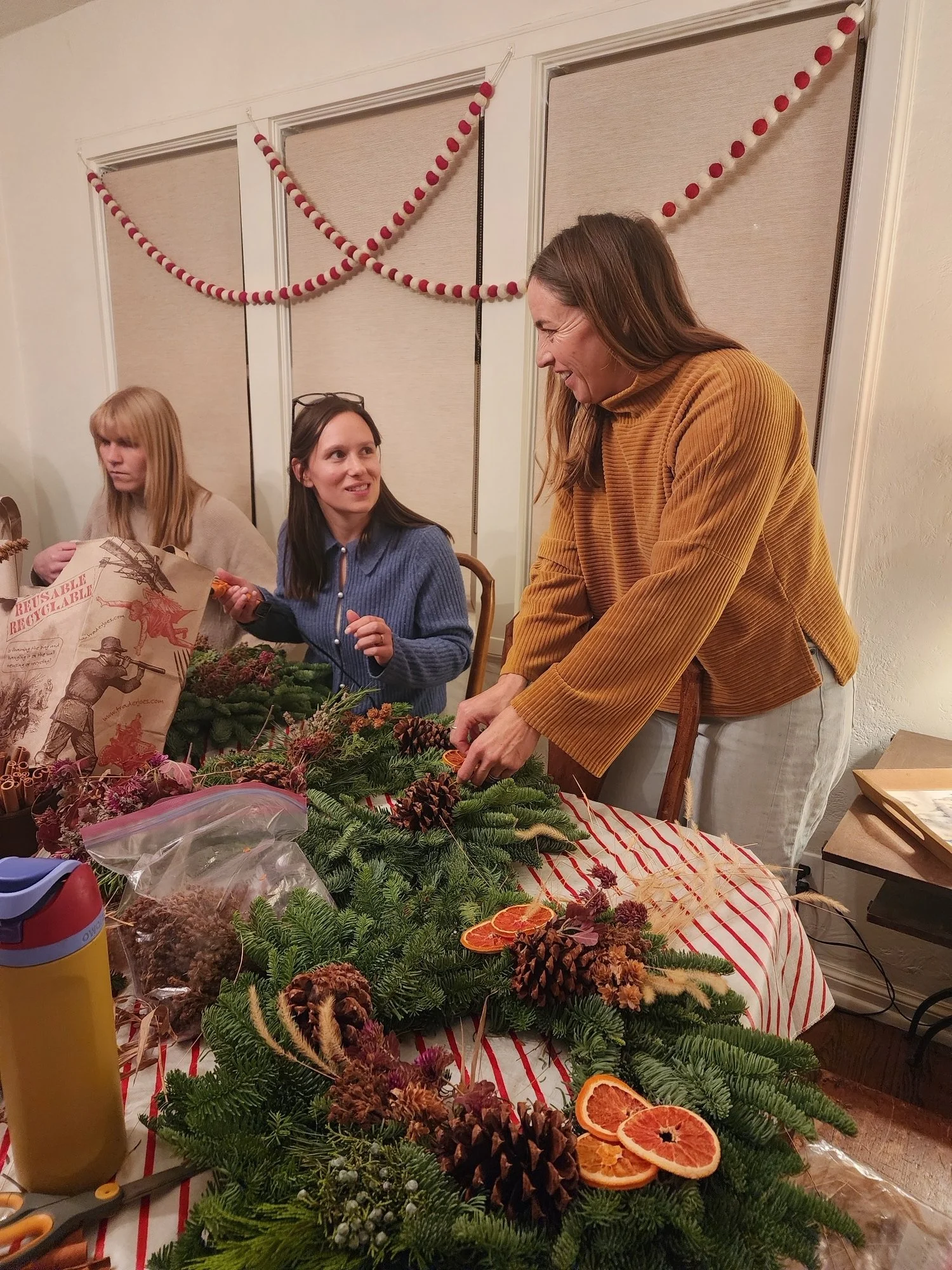
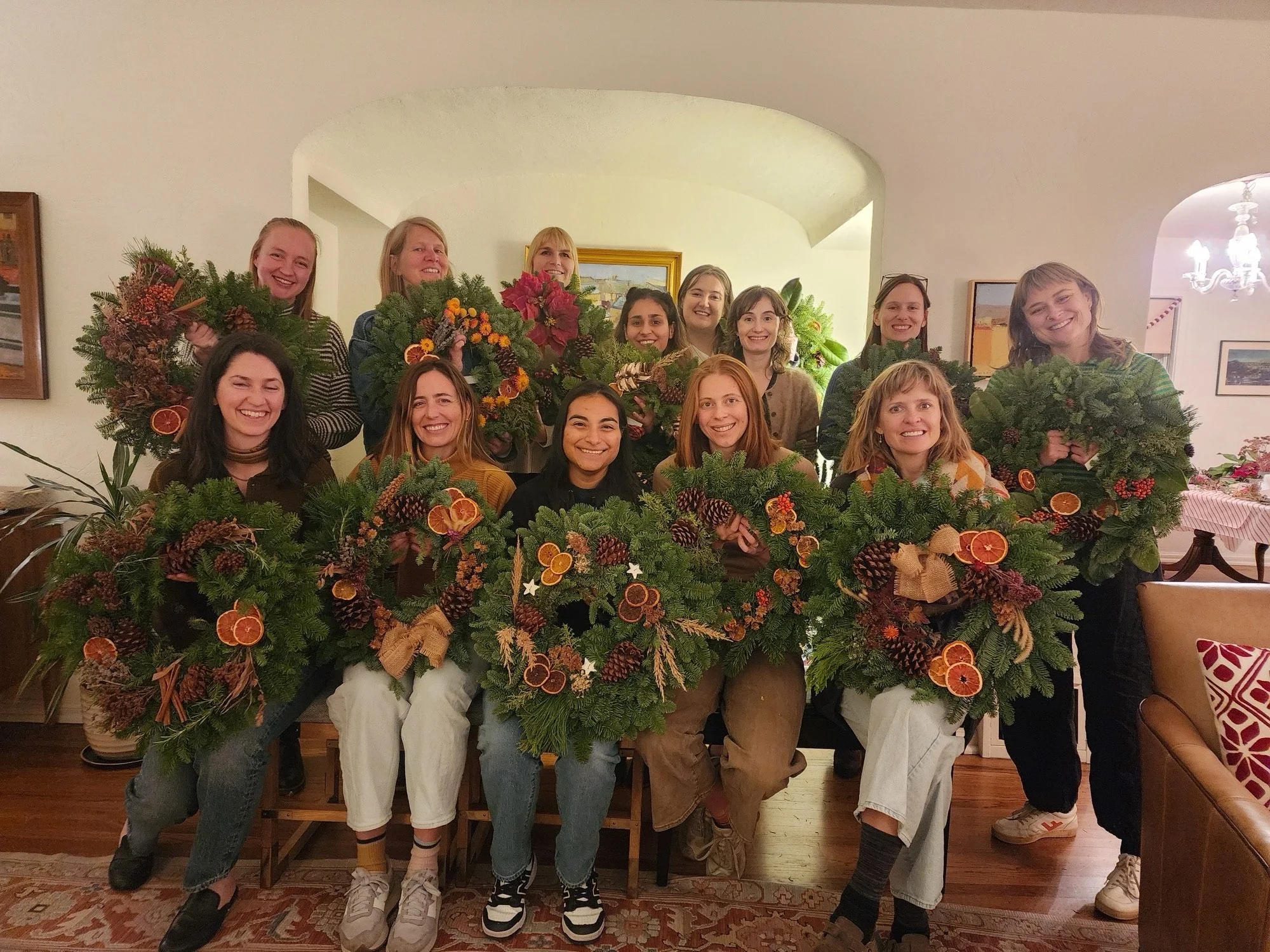
LALAs (Ladies in Landscape Architecture) gathered for their second annual holiday wreath making event at Amy Reid’s home.  This event brought together 13 women from the local landscape architecture community here in Utah. The wreaths were made activity foraged foliage.

The atmosphere was cozy with the best snacks and drinks with thoughtful conversations about landscape architecture, career paths, and shared experiences in the profession.

This and other LALA gatherings have been great at creating connection, community, creativity, and support for women within the field. Those interested in getting involved with LALAs or attending future events are encouraged to reach out and join this growing network of women in landscape architecture.


DEAR LANDSCAPE ARCHITECT

Please take a minute and submit a question RIGHT NOW: dearlautah@gmail.com

Dear Landscape Architect is a monthly feature from ASLA Utah exploring the art, ethics, and evolving practice of landscape architecture — written to spark conversation, reflection, and renewed care for our living medium. Submit your question to dearlautah@gmail.com.

 Did you miss last month? Here is the link to a question about continuing education and the core of Landscape Architecture: October’s Dear Landscape Architect


Special Thanks to ASLA Utah 2025 Sponsors & Corporate Partners for their Support! Looking forward to seeing you all in 2026!

Platinum Sponsors
BioGrass | Great Western Recreation | Rain Bird

Gold Sponsors
Belgard | Hunter/FX Luminaire | LuckyDog Recreation | MADRAX/Thomas Steele | Victor Stanley

Silver Sponsors

Berliner | Chanshare Farms | Green Blue Urban | Landscape Forms | Maglin | Omega II Fence System | PlaySpace Designs | Progressive Plants | Raft River Sod | ROMEX | Sports West Construction | Utah Topsoil & Hauling Co. | Vortex Aquatic Structures

Bronze Sponsors 
3Form | ABT Inc | Adobe Rock | Amiad | Basalte | Bermad | Black Butte Mining | CES&R | Daltile | Forms+Surfaces | GCP | GPH Irrigation | Garrett Parks & Play | Granite Seed | Hanover Architectural Product | Inman Interwest | Live Earth Products | Miller Companies | Mountainland Supply | Mountain West Precast | Musco | Netafim | Perennial Favorites | QCP | RepMasters | Sonntag Recreation | Stepstone Inc. | TORO | Tournesol | Utah Line Works | Wickcraft Boardwalks

Corporate Partners
Denton House | FenceTrac | G Brown Design

Learn More About Our Sponsors

NOVEMBER 2025 NEWSLETTER

ASLA UTAH NOVEMBER 2025 NEWSLETTER

UPCOMING EVENTS


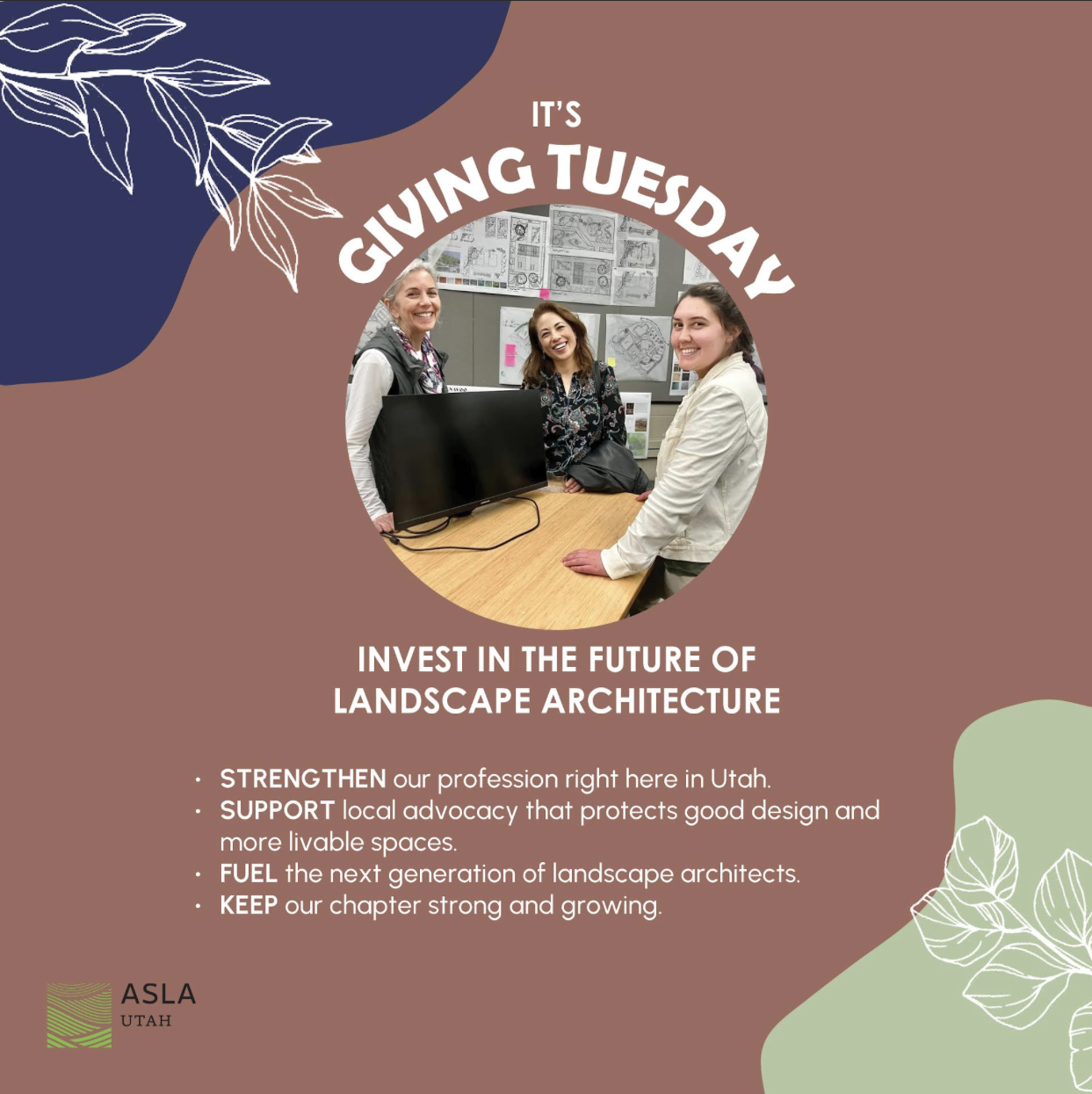
December 2nd is GivingTuesday

#GivingTuesday is a global movement of generosity and change making. Each Tuesday after Thanksgiving, the world celebrates and champions stories and community organizations making a positive difference.

This #GivingTuesday This year the Utah Chapter of the ASLA is hoping you and/or your firm will consider giving to support the important work of the ASLA Utah Chapter. The Chapter works to promote the profession of landscape architecture and support your business, career, and future right here in Utah. 100% of your donation stays with the Utah Chapter and helps support the important efforts of the Utah Chapter.

SAVE THE DATE - Friday, May 8th 2026

2026 ASLA Utah Annual Conference

The Ballpark at America First Square home of the Salt Lake Bees


LEADERSHIP EXPRESS -

Jesse Allen, ASLA Utah President

I want to begin this message by recognizing two individuals whose behind-the-scenes work is essential to ASLA Utah’s success: Ladd Schiess and Adam Castor.

Ladd, serving as our Chapter Secretary, is responsible for setting the agenda for our monthly meetings and documenting minutes. This requires him to be “in the know” on nearly everything happening across the chapter at any given time. He keeps us organized, aligned, and focused. Ladd’s attention to detail ensures that decisions are recorded, responsibilities are assigned, and initiatives keep moving forward. His work often goes unseen by most of our membership, but the chapter simply couldn’t function without him.

Adam Castor, serving as our Chapter Treasurer, manages the organization’s finances. We take this responsibility very seriously, as we are stewards of a portion of your annual dues as well as the generous contributions of our sponsors and vendor partners. Adam helps us track and allocate funds in a way that directly supports the chapter’s work. His diligence and transparency give our Executive Committee the confidence to plan responsibly and invest strategically in the programs and initiatives that advance our mission.

Thank you, Ladd and Adam. We are grateful for your leadership and your service to the profession.

In my first message last month, I shared that a major priority this year is strengthening the way we communicate who we are and what we do as landscape architects. I referenced the FrameWorks Institute report, Putting People at the Center: Reframing Landscape Architecture for Maximum Impact. The report’s core insight is simple: the public understands our work more clearly when we talk about how it benefits people, not just what it looks like or how it’s built.

Too often, we describe our projects in terms of features, materials, technical solutions, or abstract design concepts. While those details matter, they don’t communicate our value in a way the public immediately understands. When we lead with human outcomes, we help people grasp the purpose and impact of our work.

Here are a few examples, building off the report, of how we can reframe the way we talk about our projects:

From features to human benefit:

Instead of: “We designed a plaza with native plants, shade structures, and stormwater planters.”
Try: “We created a welcoming public space where people can gather comfortably, stay cool in summer, and enjoy cleaner air and water through thoughtful design.”

From design elements to lived experience:

Instead of: “We realigned a trail and added seating nodes.”
Try: “We made it easier and safer for families to reach the park, with places to rest, reflect, and connect along the way.”

From technical solutions to community impact:

Instead of: “We implemented bioswales and detention basins.”
Try: “We reduced flooding risks for nearby homes and created a healthier, more resilient neighborhood ecosystem.”

Each of these shifts helps people see landscape architecture as a service that improves lives, not just a set of drawings or site elements. It brings the focus back to people.

 This year, I encourage every member of ASLA Utah to practice this reframing in project interviews, public meetings, classroom critiques, and everyday conversations. When we consistently describe our work through the lens of human benefit, we strengthen understanding, recognition, and support for the profession as a whole.

Thank you for your continued engagement and your commitment to shaping healthy, safe, and connected communities across Utah. I look forward to the important work we will continue together in the year ahead.

Jesse Allen, ASLA Utah President


Climate Action and Biodiversity Committee Update

Devon Dillinger, PLA, ASLA, SITES AP, Climate Action & Biodiversity Chair

I am honored to begin my first full year as the Climate Action and Biodiversity Chair for the ASLA Utah Chapter. As a licensed landscape architect and SITES Accredited Professional with experience in civic, park, campus, and public realm projects, I am committed to advancing climate positive and biodiversity positive design in Utah. My work centers on designing places that strengthen ecological systems, support public health, and reflect community identity. I look forward to bringing this perspective to our chapter as we advance climate action and biodiversity initiatives throughout Utah at a time when this work is even more important.

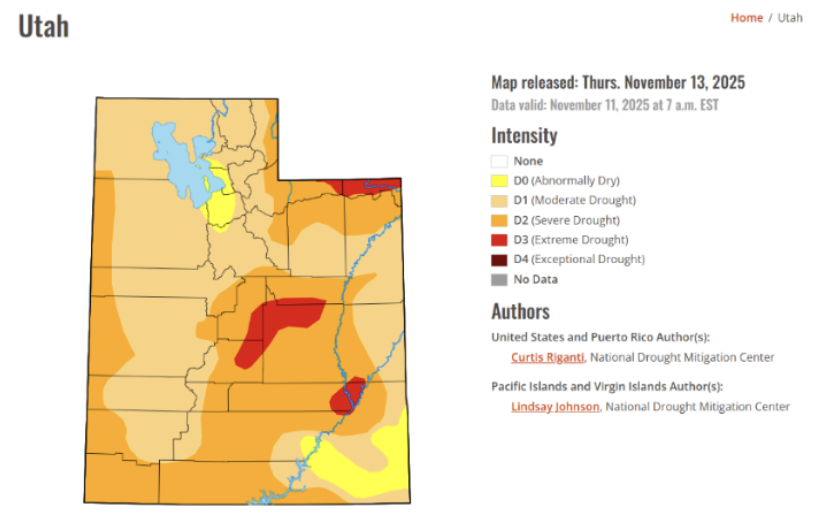
Our state faces some of the most rapid climate shifts in the nation. Utah is warming faster than the global average, and long-term trends show increased drought (see map for current drought monitor), shrinking snowpack, heightened wildfire risk, and significant stress on ecosystems and watersheds.¹

The Utah Department of Natural Resources notes that water supply, watershed health, invasive species pressures, and wildlife habitat resilience are among the state’s most urgent challenges.²

These conditions directly affect our communities, economies, and public health. They also underscore the importance of landscape architecture as a profession that bridges natural systems with human needs.

This year marks the release of the updated national plan, Landscape Architecture 2040: Climate and Biodiversity Action Plan. This plan replaces the earlier Climate Action Plan and Field Guide and will guide ASLA and its chapters through 2030. It presents a comprehensive vision for 2040 in which all landscape architecture projects achieve zero greenhouse gas emissions, double carbon sequestration from business as usual, restore and enhance biodiversity, and advance equity in the distribution of climate and ecological benefits.³ The plan also sets new five-year benchmarks, including a 50 to 65% reduction in emissions and measurable improvements in ecological restoration, habitat protection, and community resilience.⁴

Several components of the new plan are especially relevant to Utah. Our landscapes already illustrate the tight relationship between climate and biodiversity. Increased temperatures, greater variability in precipitation, and long-term water scarcity threaten the ecological systems that support our valleys, mountains, and deserts. Biodiversity decline reduces the natural capacity of Utah’s landscapes to store carbon, buffer extreme heat, moderate wildfire behavior, and maintain healthy hydrology. The plan’s emphasis on nature-based solutions, watershed-scale planning, and restoration of ecological function directly aligns with the long-term needs of Utah communities.

As Chair, my goals this year include sharing tools from the new plan, highlighting Utah-based examples of climate and biodiversity positive design, and coordinating with our regional partners and academic programs. I will also be reaching out to members who wish to contribute expertise, case studies, or ideas for educational events and collaborative initiatives. Our chapter has an opportunity to lead regional conversations about climate resilience, ecological restoration, and community health, all grounded in the landscape architecture profession. I look forward to working with all of you over the coming year!


DEAR LANDSCAPE ARCHITECT

We didn’t get any new questions this month, so please take a minute and submit a question RIGHT NOW: dearlautah@gmail.com

 Dear Landscape Architect is a monthly feature from ASLA Utah exploring the art, ethics, and evolving practice of landscape architecture — written to spark conversation, reflection, and renewed care for our living medium. Submit your question to dearlautah@gmail.com.

 Did you miss last month? Here is the link to a question about continuing education and the core of Landscape Architecture: October’s Dear Landscape Architect


Sitting Still - Olin Documentary and SLCPL Rooftop Tour Recap

Adam Castor ASLA Utah Chapter Treasurer

Sitting still. Taking in all you that you see, hear, and feel with a pen and sketchbook. Or paint and an easel. Pencils, chalk, charcoal, napkins, sketch paper, whatever. It’s probably something most of us would love to spend more time doing….graphically expressing ideas and thoughts, documenting experiences without a camera, understanding the dynamics of people, places, and environments, imagining amazing landscapes. Laurie Olin seems to have spent most of his life doing this. So much so, that a really inspiring documentary was created to highlight Olin’s life and career through his sketches, paintings, designs, landscape master plans, and candid interviews with other designers and artists that were influenced by Olin’s vision. Sitting Still, by filmmaker Gina Anelone.

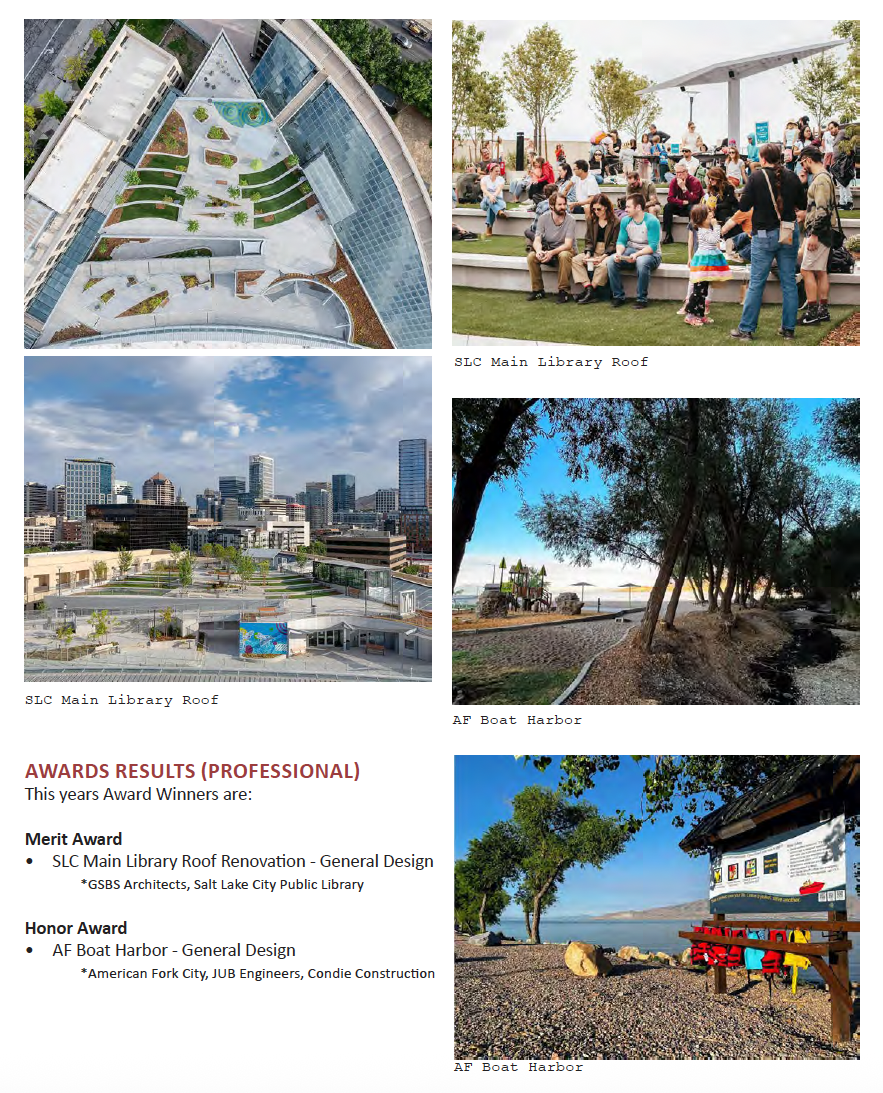
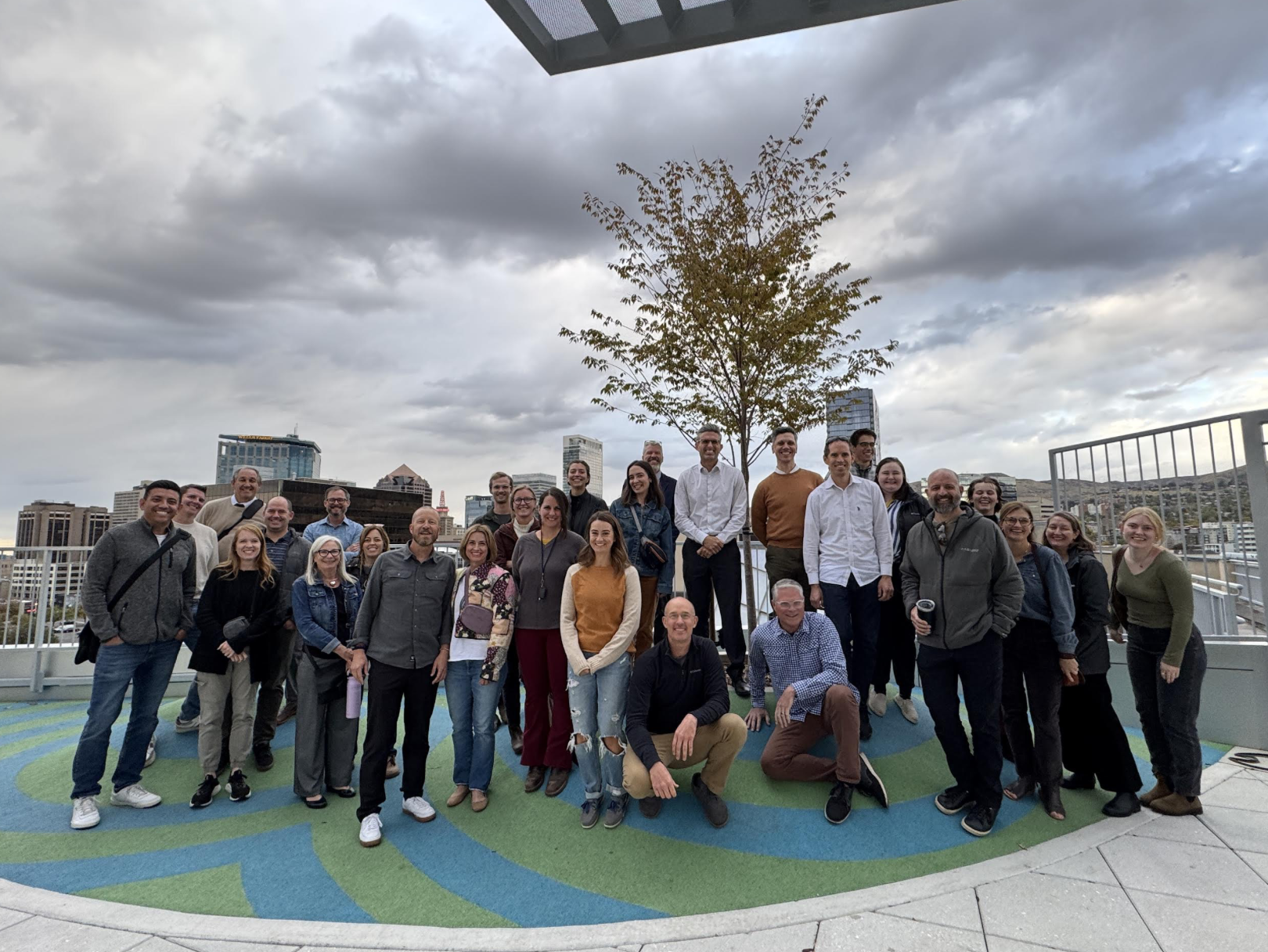
Following a tour and presentation of the new Salt Lake City Main Library rooftop landscape and outdoor spaces by GSBS, ASLA Utah Chapter hosted a screening of the documentary for a group of about thirty ASLA members and practitioners. The tour of the rooftop highlighted the transformation of a persistent leaky rooftop with limited usable space and accessibility into an outdoor space that provides full accessibility to a variety of seating and viewing spaces, group photos and selfies, and a landscape design that will mature into an abundance of shade tree canopy and surrounding plants and wildlife. Additional rooftop highlights include the perimeter steel and glass fall protection along the perimeter edge, water proofing systems, synthetic turfgrass surfacing, site furnishings, and a new enclosed space for beehives. The library rooftop turned out to be a very nice, finished project and a great example of the importance of landscape architects’ influence on a project involving other design professionals.

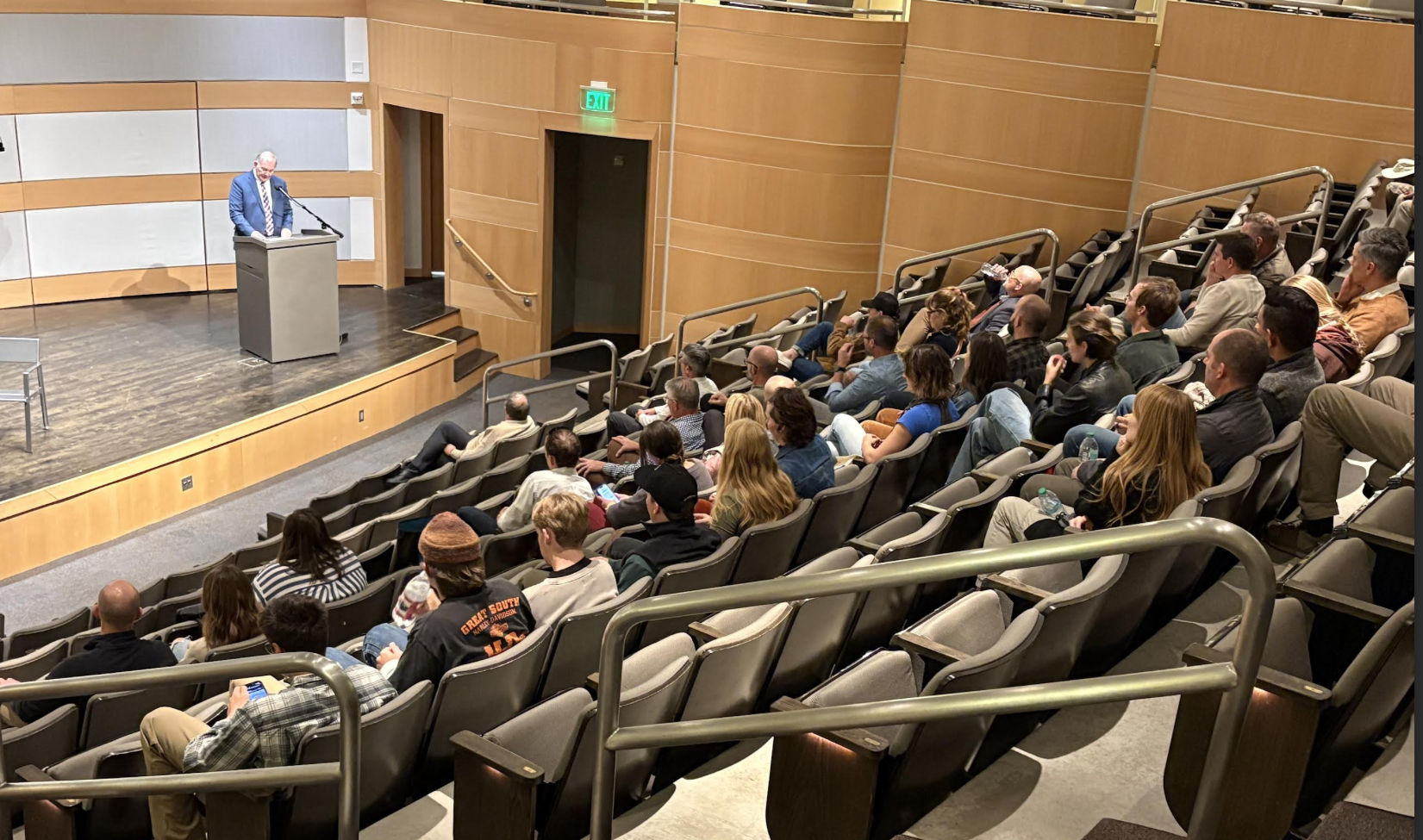
Back to the film. It started with some opening remarks from Bill Williams, Director of Temple Design, Special Projects Department. Bill spoke about Laurie Olin’s connection to Utah through design on the LDS Church’s conference center rooftop, along with some other anecdotes about Olin that seemed on par with the film’s content and stories told by those interviewed for the film. Laurie Olin’s name is connected to some of the most notable landscape architecture projects and his influence has probably reached dozens of others. But the film’s focus wasn’t necessarily on those projects, its essence was in the form of portraying Olin’s ability to observe and understand, to make sense of the multitude of external factors that contribute to a place, to scribble, to sketch, to have a vision come to life through art and landscape architecture. To be loose. Doing it all while sitting still.

“One of the best methods ever devised to learn from the world is to actually be in it and sit still…”. – Laurie Olin


2025 ASLA National Conference in New Orleans

Carson Trejo, LAEP senior and USU ASLA VP of Public Relations

Hey Utah ASLA! My name is Carson Trejo, and I am the VP of Public Relations for our student chapter at USU. I’m excited to share my experience from the 2025 ASLA National Conference in New Orleans!

Last month, about 30 of our students had the privilege of attending the ASLA Conference in New Orleans. In the LAEP program at USU, we are fortunate to have full support to attend conferences and events like these. These opportunities are unique and meaningful in developing as professionals, exploring our interests, and growing as a program and a chapter.

It is always exciting to participate in the events of the conference! The sessions this year were great as usual. My favorite session was “Bees, Butterflies, Beetles – Oh My! Science-Backed Framework for Urban Pollinator Conservation.” This session presented the importance of science-based implementation of urban pollinator habitat while making it accessible and engaging for the public. They developed and presented the Somerville Pollinator Action Plan, which lays out the importance of pollinator conservation and how the community can participate. The document is great, so you should check it out.

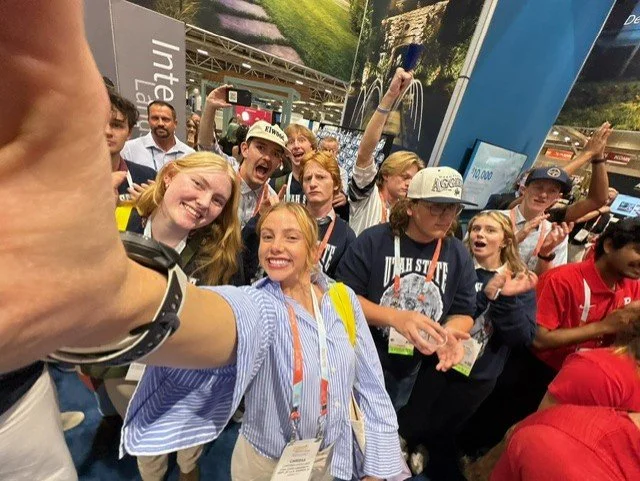
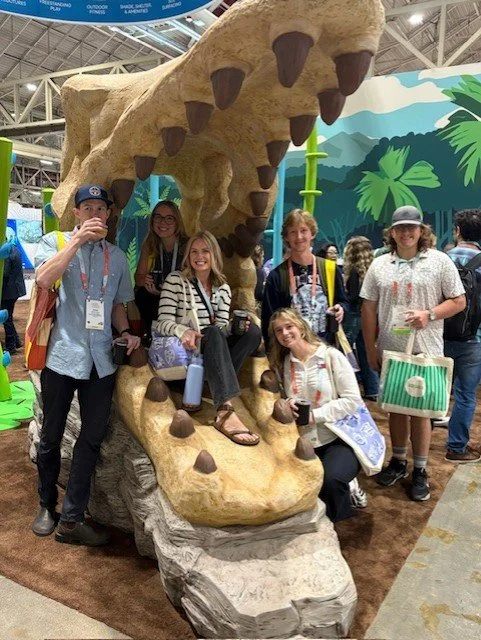
At the LABash Block Party, we received 1st place in the School Spirit Contest for the second year in a row! Thank you to all of the professionals and alumni who helped us go BACK TO BACK! The dedication many of you have to connect with our student chapter is incredibly meaningful.

Lastly, the opportunity we are given to explore new areas of the country and to understand the culture and challenges that a place faces is extremely valuable. Visiting such a culturally diverse and rich place like New Orleans is something the members of our chapter will never forget!


Special Thanks to ASLA Utah 2025 Sponsors & Corporate Partners for their Support!

Platinum Sponsors
BioGrass | Great Western Recreation | Rain Bird

Gold Sponsors
Belgard | Hunter/FX Luminaire | LuckyDog Recreation | MADRAX/Thomas Steele | Victor Stanley

Silver Sponsors

Berliner | Chanshare Farms | Green Blue Urban | Landscape Forms | Maglin | Omega II Fence System | PlaySpace Designs | Progressive Plants | Raft River Sod | ROMEX | Sports West Construction | Utah Topsoil & Hauling Co. | Vortex Aquatic Structures

Bronze Sponsors 
3Form | ABT Inc | Adobe Rock | Amiad | Basalte | Bermad | Black Butte Mining | CES&R | Daltile | Forms+Surfaces | GCP | GPH Irrigation | Garrett Parks & Play | Granite Seed | Hanover Architectural Product | Inman Interwest | Live Earth Products | Miller Companies | Mountainland Supply | Mountain West Precast | Musco | Netafim | Perennial Favorites | QCP | RepMasters | Sonntag Recreation | Stepstone Inc. | TORO | Tournesol | Utah Line Works | Wickcraft Boardwalks

Corporate Partners
Denton House | FenceTrac | G Brown Design

Learn More About Our Sponsors

OCTOBER 2025 NEWSLETTER

ASLA UTAH OCTOBER 2025 NEWSLETTER

UPCOMING EVENTS


SAVE THE DATE - Friday, May 8th 2026

2026 ASLA Utah Annual Conference

The Ballpark at America First Square home of the Salt Lake Bees


LEADERSHIP EXPRESS -

Jesse Allen, ASLA Utah President

I’m honored to be serving as your 2025–2026 Chapter President, alongside an outstanding group of Executive Committee members whose energy and commitment continue to elevate our profession. Together, we’re focused on advancing ASLA Utah’s mission of advocacy, communication, education, and fellowship.

 I want to take a moment to recognize three individuals whose leadership and dedication are especially vital to our chapter’s success:

  1. Jenny Sonntag, our Executive Director, whose organization, leadership, and steady coordination keep this chapter thriving. From event logistics and member outreach to the details that make our programs successful, Jenny’s professionalism and care are indispensable to ASLA Utah’s continued momentum.

  2. Bryce Ward, our Trustee, who has served in this role since 2021. Bryce acts as the conduit between our local chapter and the ASLA national board, ensuring Utah’s voice is represented in national dialogue. His consistent leadership has also helped steer the Utah Chapter Strategic Plan and strengthen our long-term vision.

  3. Lars Erickson, our Past President, who’s shoes I’m trying to fill, is now focusing his attention on our Advocacy and Outreach Coordinating Council. This group is working to elevate the visibility and influence of landscape architecture at both the state and municipal levels, a crucial step toward broader recognition of our profession’s impact.

To these three, and to all the volunteers and leaders who give their time and talent, thank you for keeping ASLA Utah moving forward.

We’ve already hit the ground running this fall with two big events: the Laurie Olin Documentary Film Screening and the ASLA Utah Awards Banquet. Both were uplifting reminders of why we do what we do. The Olin film prompted reflection on the legacy of one of the field’s great thinkers, his humility, craft, and ability to connect design with human experience. The Awards Banquet celebrated the creativity, innovation, and purpose driving the work of Utah’s landscape architects and students across a wide range of project types. Together, these events set a great tone for the year ahead.

 My personal focus for 2025–2026 is on recognition, continuing the work of increasing the understanding of our profession in two key ways:

 1. Governmental Awareness
Working closely with our lobbyist Dave Kallas, we are strengthening relationships with public entities, municipalities, and state agencies to highlight the tangible value landscape architects bring to Utah’s communities. In the coming weeks, we’ll meet with leaders at DFCM to discuss the role of landscape architecture in state projects, an important conversation given how many municipalities reference state standards and structures in their own frameworks.

2. Public Communication
We are also working to reach the broader public with a clearer and more relatable story of what landscape architecture is and does. The FrameWorks Institute, in partnership with ASLA, CLARB, LAF, and others, published “Putting People at the Center: Reframing Landscape Architecture for Maximum Impact.” You can access the full report through your ASLA membership here: https://www.asla.org/uploadedFiles/CMS/Practice/Frameworks/Report.pdf

The report’s central message is simple, landscape architecture is work by people, for people. To improve public understanding, it urges us to lead with how our work benefits people, how designed outdoor spaces bring communities together, improve quality of life, and strengthen connection to place.

 In the Laurie Olin Documentary, he reminds us that our work is often inherently subtle. It can appear so seamlessly integrated with its surroundings that it feels as though it has always been there. That quiet success, however, also makes it harder for the public to understand what landscape architects do. Our work isn’t usually a single object to point at, it’s the space between, the space around, and the space we all share outside.

This year let’s each take part in that effort, to communicate the impact that landscape architecture has on people more clearly, more confidently, and more often.

 Thank you for the opportunity to serve, for your ongoing engagement in ASLA Utah, and for the impact you make in your communities and workplaces. I look forward to working alongside you in the year ahead.

Jesse Allen, ASLA Utah President


Dear Landscape Architect — A New Feature for ASLA Utah Members

Dear Landscape Architect is a monthly feature from ASLA Utah exploring the art, ethics, and evolving practice of landscape architecture — written to spark conversation, reflection, and renewed care for our living medium. Submit your question to dearlautah@gmail.com.

October 2025: Dear Landscape Architect, “Should there be more emphasis, continuing education classes, and overall education on good planting design basics for landscape architects and students?”

Thank you for asking such an important question — one that touches the very heart of our profession. The short answer is yes — absolutely. But the longer answer reveals why this emphasis is essential, what’s currently missing, and how we can bring planting design back to the center of our professional identity. Please read on…CLICK HERE TO READ FULL RESPONSE


Documenting Historic Landscapes Can Help Us Plan for Responsible Growth

Amy Ried, ASLA Utah HALS Committee Chair 

From private gardens to public spaces like cemeteries, parks, byways, and archeological sites – historic landscapes hold layers of memories and stories that connect us as families and communities. As Utah continues to face unprecedented growth in communities across our state, taking time to identify and document significant historic landscapes helps lay the groundwork for thoughtful planning, revitalization, and historic preservation efforts. Documentation can also be done to celebrate iconic sites and serve as an important record of landscapes which have disappeared. Slowing down to consider our historic landscapes and the context of the environment which shaped them, can positively inform our work as landscape architects today. 

Founded in 2000 by the National Park Service with support from ASLA and the Library of Congress, HALS was established to document the way historic landscapes have shaped our nation’s heritage and development. I’m excited to join our chapter as the new HALS Liaison! I’ll be working with the Utah State Historic Preservation Office and ASLA Utah leadership to compile a list of historic landscapes to consider for HALS documentation. Please share your ideas for possible sites with me: amyreid99@gmail.com. To learn more about HALS and to see the seven Utah sites already in the database, please click here.  

Undated perspective photo of stockyards. Courtesy USHS Classified Photo Collection. This photograph is taken from the Union Stock Yard (Ogden Union Stockyard) HALS report completed in 2014 by Io LandArch. Ogden City ordered the report to comply with Section 106 of the National Historic Preservation Act since they were receiving federal funding for site redevelopment. 


Special Thanks to ASLA Utah 2025 Sponsors & Corporate Partners for their Support!

Platinum Sponsors
BioGrass | Great Western Recreation | Rain Bird

Gold Sponsors
Belgard | Hunter/FX Luminaire | LuckyDog Recreation | MADRAX/Thomas Steele | Victor Stanley

Silver Sponsors

Berliner | Chanshare Farms | Green Blue Urban | Landscape Forms | Maglin | Omega II Fence System | PlaySpace Designs | Progressive Plants | Raft River Sod | ROMEX | Sports West Construction | Utah Topsoil & Hauling Co. | Vortex Aquatic Structures

Bronze Sponsors 
3Form | ABT Inc | Adobe Rock | Amiad | Basalte | Bermad | Black Butte Mining | CES&R | Daltile | Forms+Surfaces | GCP | GPH Irrigation | Garrett Parks & Play | Granite Seed | Hanover Architectural Product | Inman Interwest | Live Earth Products | Miller Companies | Mountainland Supply | Mountain West Precast | Musco | Netafim | Perennial Favorites | QCP | RepMasters | Sonntag Recreation | Stepstone Inc. | TORO | Tournesol | Utah Line Works | Wickcraft Boardwalks

Corporate Partners
Denton House | FenceTrac | G Brown Design

Learn More About Our Sponsors

SEPTEMBER 2025 NEWSLETTER

ASLA UTAH SEPTEMBER 2025 NEWSLETTER

UPCOMING EVENTS


SAVE THE DATE - Friday, May 8th 2026

2026 ASLA Utah Annual Conference

The Ballpark at America First Square home of the Salt Lake Bees


LEADERSHIP EXPRESS -

Lars Erickson, ASLA Utah President

Hello ASLA Utah!!!

It’s that time again—the National ASLA Conference is quickly approaching. This year, it will be held in New Orleans from October 8–10. While I won’t be attending, Jesse Allen will be representing our chapter. Upon his return, Jesse will step into the role of Utah Chapter President, and I’m genuinely excited to see his perspective and talents guide us forward.

Aaron Johnson will also be attending. He’ll be taking over Jesse’s current role and spending the next 12 months learning the ropes. Both Jesse and Aaron will participate in several meetings with national and chapter leaders, discussing key initiatives and coordinating efforts that require strong leadership. From my own experience, it’s an eye-opening opportunity that brings back fresh ideas and renewed energy to serve our chapter and support its members.

This coordination can have a meaningful impact on all of us as practitioners. I encourage you to get involved—reach out to someone on the Executive Committee, ask questions, and offer your help. Your voice matters. I hope to see many of you May 8th at the 2026 Annual Conference on Landscape Architecture. Details will be shared soon.

As my term as ASLA Utah Chapter President comes to a close, I want to share a few final thoughts. Serving in this role has been a deeply rewarding experience. The best part has been the many conversations I’ve had with you—fellow landscape architects—about our shared practice. There’s a lot of passion in our ranks, and it’s been truly enlightening.

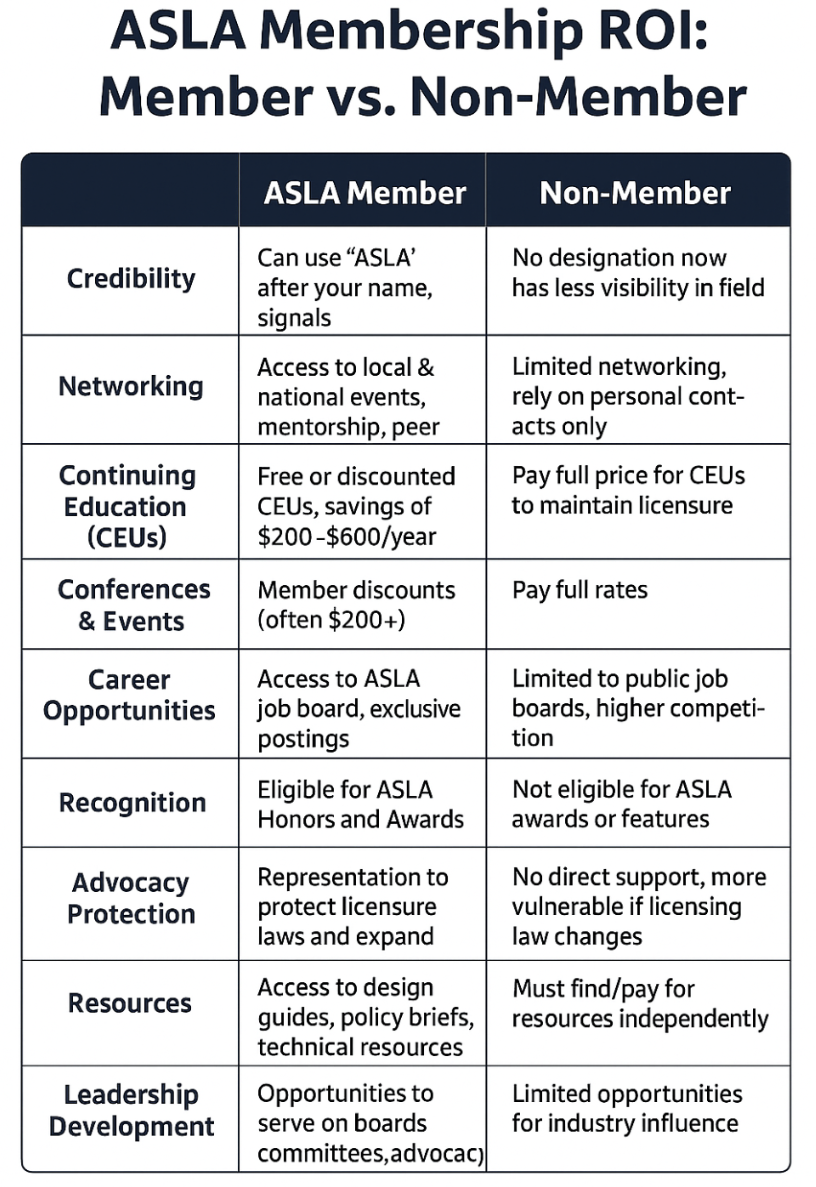
One recent conversation stands out. A colleague asked me to explain the value of ASLA membership. It caught me off guard—not because it’s hard to explain, but because this individual isn’t a member, yet uses “ASLA” after their name. That moment reminded me how important it is to understand and communicate the return on investment of membership. Below is a short list of benefits— it’s not exhaustive, a little messy but there’s real value there:

Ultimately, our practice defines the profession of Landscape Architecture. How will you define it? If you use “ASLA” after your name, you’re signaling your commitment to the premier organization advocating for us. That designation carries meaning, and it belongs to ASLA members. I encourage you to continue using it—and more importantly, to participate, ask questions, and share your perspective. Your insight helps shape our profession.

To those who use “ASLA” without being members, doing so also speak volumes about the value and importance of the organization. We need you too. Maybe even a little more so.

All the Best, Lars Erickson, ASLA Utah President


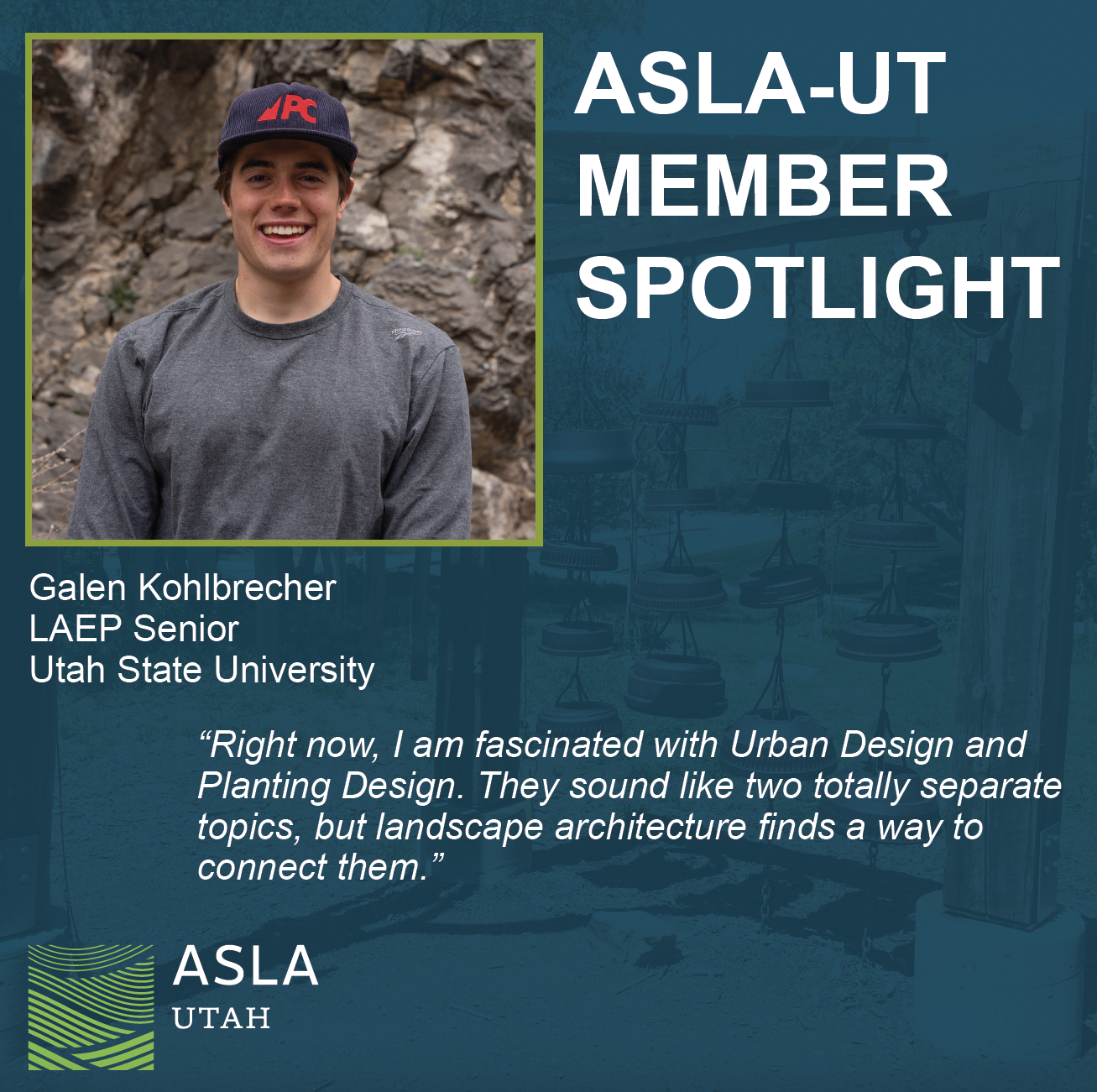
Who are you and where are you from? My name is Galen Kohlbrecher, and I grew up in Illinois. I am a Junior studying Landscape Architecture and Environmental Planning at Utah State University.

Why are you interested in landscape architecture? I got interested in Landscape Architecture after Dave Anderson gave me a tour of the department in my Junior year of High School. I’m interested in Landscape Architecture because it is a variety of degrees all packed together. It’s tough to name everything because I know I would leave something out. However, landscape architecture is an opportunity to learn about the base level of numerous topics. Right now, I am fascinated with Urban Design and Planting Design.They sound like two totally separate topics, but landscape architecture finds a way to connect them.

What is your favorite thing about LA studio? There is no place on the Campus like the studio. In my freshman year, I was lectured on the importance of studio culture and its importance to our degree and occupation. I have built great friendships in the studio through working long hours with people who are passionate about the same things as I am. My favorite thing about the studio is the comradery that is developed with the different classes and degrees.

What is your favorite hobby? Since coming out to Utah I have been able to learn how to rock climb. This is a fun but time-demanding hobby and as I get more involved in extracurriculars, I find that I only have time to run. During the fall, when I find the time, you can find me trail running or hiking in the canyon.

What do you find inspiring? What first comes to mind is the work being done at SCAPE. They see climate change as a large-scale issue meant to be solved with large projects. Being from the St. Louis area, I admire firms doing innovative urban design work to revive cities and neighborhoods while also considering the ecological function of things.


Introducing: Dear Landscape Architect — A New Feature for ASLA Utah Members

Have a tricky client question? Curious how other firms approach design, trends, hiring, software standards, or work-life balance? Need guidance on licensure, mentorship, or your next career move?

We’re excited to announce the launch ofDear Landscape Architect “— a new monthly feature in the ASLA Utah newsletter created by members, for members.

Each month, we will select questions submitted anonymously by our ASLA Utah community and share responses from a diverse panel of seasoned professionals. Think of it as an advice column meets professional roundtable — candid, thoughtful, and tailored specifically to landscape architects in Utah.

Who’s Answering? Your questions will be reviewed by a panel of 5–6 landscape architects from a mix of practice types and experience levels — including principals from large firms, senior associates at regionally focused firms, and leaders of small local studios. We’re building a team that reflects the diversity of our profession, offering you a range of perspectives and insights.

Have a Question? No question is too small or too big. Just send your inquiry to: dearlautah@gmail.com. Your name will remain confidential, and selected questions will be featured with responses in our monthly newsletter.

Let Dear Landscape Architect be your new go-to for peer-driven advice. Whether you’re just starting out or a seasoned pro yourself, we all benefit from the shared knowledge of our community. Start sending in those questions!


New members will be automatically entered into a drawing for a chance to win.

Second entry period: April 12, 2025 – October 12, 2025

Second Drawing: Held at the ASLA Awards Ceremony in October 2025

Additional Details:

  • You do not need to be present to win.

  • Winners will be selected at random by the ASLA Utah

  • To enter, visit ASLA Join Page or scan the QR code.


Special Thanks to ASLA Utah 2025 Sponsors & Corporate Partners for their Support!

Platinum Sponsors
BioGrass | Great Western Recreation | Rain Bird

Gold Sponsors
Belgard | Hunter/FX Luminaire | LuckyDog Recreation | MADRAX/Thomas Steele | Victor Stanley

Silver Sponsors

Berliner | Chanshare Farms | Green Blue Urban | Landscape Forms | Maglin | Omega II Fence System | PlaySpace Designs | Progressive Plants | Raft River Sod | ROMEX | Sports West Construction | Utah Topsoil & Hauling Co. | Vortex Aquatic Structures

Bronze Sponsors 
3Form | ABT Inc | Adobe Rock | Amiad | Basalte | Bermad | Black Butte Mining | CES&R | Daltile | GCP | GPH Irrigation | Garrett Parks & Play | Granite Seed | Hanover Architectural Product | Inman Interwest | Live Earth Products | Miller Companies | Mountainland Supply | Mountain West Precast | Musco | Netafim | Perennial Favorites | QCP | RepMasters | Sonntag Recreation | Stepstone Inc. | TORO | Tournesol | Utah Line Works | Wickcraft Boardwalks

Corporate Partners
Denton House | FenceTrac | G Brown Design

Learn More About Our Sponsors

AUGUST 2025 NEWSLETTER

ASLA UTAH AUGUST 2025 NEWSLETTER

UPCOMING EVENTS


LEADERSHIP EXPRESS - 5301: Part 2, The “Practice of landscape architecture”. What does it mean, to you?

Lars Erickson, ASLA Utah President

Hello ASLA Utah!!!

I’ve only heard from one of you concerning my request last month. I don’t think that’s on our chapter membership as much as the archaic nature of a newsletter. But we’ll continuing building with last months message, here’s what the State of Utah defines the “Practice of Landscape Architecture” as… Effective 10/1/2024 58-53-102.  Definitions.  In addition to the definitions in Section 58-1-102, as used in this chapter:

(3) Practice of landscape architecture; means rendering or offering to render any of the following services:

(a) production of a site plan which may include the design of any of the following:

(i) sprinkler irrigation systems;

(ii) landscape grading and drainage plans; or

(iii) parking lots;

(b) design of any of the following structures incidental to the production of a site plan:

(i) retaining walls; or

(ii) raised platforms, decks, and walkways;

(c) design of any of the following structures incidental to the production of a site plan when the structure does not exceed 1,000 square feet:

(i) covered pavilions;

(ii) gazebos;

(iii) restrooms;

(iv) storage and maintenance facilities; or

(v) other accessory structures; or

(d) collaboration with architects and professional engineers in the design of roads, bridges, buildings, and structures with respect to the functional and aesthetic requirements of the area in which they are to be placed.

If you’ve been following my messages at all the past year, you won’t be surprised that I find this description fairly limiting. Even more limiting is what’s continued in Utah Code Title 58, Chapter 53 Landscape Architects Licensing Act:304 Exemptions from licensure:

(2) a person designing sprinkler irrigation systems when licensed as a landscape contractor under Title 58, Chapter 55, Utah Construction Trades Licensing Act;

(3) a person licensed to practice professional engineering or professional structural engineering under Title 58, Chapter 22, Professional Engineers and Professional Land Surveyors Licensing Act; (4a person licensed to practice architecture under Title 58, Chapter 3a, Architects) Licensing Act;

Did you know this? Is it a concern to you? We as Landscape Architects define what weare by how we practice in addition to how we discuss our profession. WE NEED TO HEAR WHAT YOU THINK ON THIS. NOW IS THE TIME TO MAKE YOUR VOICE HEARD. I’m not looking to back up what I think. Our chapter needs to know if this is important to you. I just don’t think the silence I’ve been hearing is acceptance of the status quo. So again I ask…

What does it mean to you? Do you think we should define what we do with comparisons to architects and engineers? I’d love to know what you think. Send me an email larserickson@gmail.com with the subject line RE: -5301. I hope to hear from you.

All the best, Lars Erickson, ASLA UT President


Introducing: Dear Landscape Architect — A New Feature for ASLA Utah Members

Have a tricky client question? Curious how other firms approach design, trends, hiring, software standards, billing rates, or work-life balance? Need guidance on licensure, mentorship, or your next career move?

We’re excited to announce the launch ofDear Landscape Architect “— a new monthly feature in the ASLA Utah newsletter created by members, for members.

Each month, we will select questions submitted anonymously by our ASLA Utah community and share responses from a diverse panel of seasoned professionals. Think of it as an advice column meets professional roundtable — candid, thoughtful, and tailored specifically to landscape architects in Utah.

Who’s Answering? Your questions will be reviewed by a panel of 5–6 landscape architects from a mix of practice types and experience levels — including principals from large firms, senior associates at regionally focused firms, and leaders of small local studios. We’re building a team that reflects the diversity of our profession, offering you a range of perspectives and insights.

Have a Question? No question is too small — or too big. Just send your inquiry to: dearlautah@gmail.com. Your name will remain confidential, and selected questions will be featured with responses in our monthly newsletter.

Let Dear Landscape Architect be your new go-to for peer-driven advice. Whether you’re just starting out or a seasoned pro yourself, we all benefit from the shared knowledge of our community. Start sending in those questions!


Election Results: 2025-2026 Utah ASLA Executive Committee

We are pleased to announce the results of the 2025 Utah ASLA Chapter Elections — with all four candidates running unopposed, we’re excited to welcome this talented group of professionals to the Executive Committee.

  • Aaron Johnson will be rejoining the Executive Committee as President Elect, ending a two-year break since his last term as VP of Visibility & Public Affairs. We are glad to welcome Aaron back, bringing his experience and leadership to the chapter.

  • Tanner Snow returns for a second term as Vice President of Professional Development, continuing to guide our professional growth efforts.

  • Critter Coughlin has been elected as Vice President of Membership & Member Services, stepping into the role previously held by Tyler Smithson. Critter has already been a valuable member of the committee, and we’re excited for his continued involvement. A big thank you to Tyler Smithson, who has done an outstanding job organizing our membership drives and awards program—we appreciate all the time and care he brought to the position.

  • McKenna Montgomery will serve as our new Vice President of Visibility & Public Affairs, taking over from Josh Quigley. McKenna has already been actively assisting the committee, and we’re thrilled to have her step into a leadership role. Many thanks to Josh for his work and thoughtful groundwork in this area.

Looking Ahead: We are excited to move into this new year of leadership with Jesse Allen as President, Lars Erickson as Past-President, and we extend our best wishes to Paul Stead, who has completed his term and will continue to contribute to the profession in new ways.

To our outgoing VPs—Tyler Smithson and Josh Quigley—we sincerely appreciate your service and hope to see you continue your involvement through committees and chapter events.

We Need You!

ASLA Utah continues to promote and protect the landscape architecture profession—and we can always use more help! If you’re interested in joining a committee, assisting with even just one event, or just pitching in here and there, please reach out. Your support makes all the difference.

Here’s to another great year for ASLA Utah Chapter!


MEET YOUR NEWLY ELECTED ASLA UTAH EXECUTIVE COMMITTEE MEMBERS


New members will be automatically entered into a drawing for a chance to win.

Second entry period: April 12, 2025 – October 12, 2025

Second Drawing: Held at the ASLA Awards Ceremony in October 2025

Additional Details:

  • You do not need to be present to win.

  • Winners will be selected at random by the ASLA Utah

  • To enter, visit ASLA Join Page or scan the QR code.


Special Thanks to ASLA Utah 2025 Sponsors & Corporate Partners for their Support!

Platinum Sponsors
BioGrass | Great Western Recreation | Rain Bird

Gold Sponsors
Belgard | Hunter/FX Luminaire | LuckyDog Recreation | MADRAX/Thomas Steele | Victor Stanley

Silver Sponsors Berliner | Chanshare Farms | Green Blue Urban | Landscape Forms | Maglin | Omega II Fence System | PlaySpace Designs | Progressive Plants | Raft River Sod | ROMEX | Sports West Construction | Utah Topsoil & Hauling Co. | Vortex Aquatic Structures

Bronze Sponsors 
3Form | ABT Inc | Adobe Rock | Amiad | Basalte | Bermad | Black Butte Mining | CES&R | Daltile | GCP | GPH Irrigation | Garrett Parks & Play | Granite Seed | Hanover Architectural Product | Inman Interwest | Live Earth Products | Miller Companies | Mountainland Supply | Mountain West Precast | Musco | Netafim | Perennial Favorites | QCP | RepMasters | Sonntag Recreation | Stepstone Inc. | TORO | Tournesol | Utah Line Works | Wickcraft Boardwalks

Corporate Partners
Denton House | FenceTrac | G Brown Design

Learn More About Our Sponsors